How to Style Your Prom Look from Hair to Heels
Stop picking a dress and then 'finding things that match.' That’s how you end up looking basic. We’re building a look. Hair, accessories, heels—everything needs to hit. Let’s break down the Hair-to-Heel blueprint.
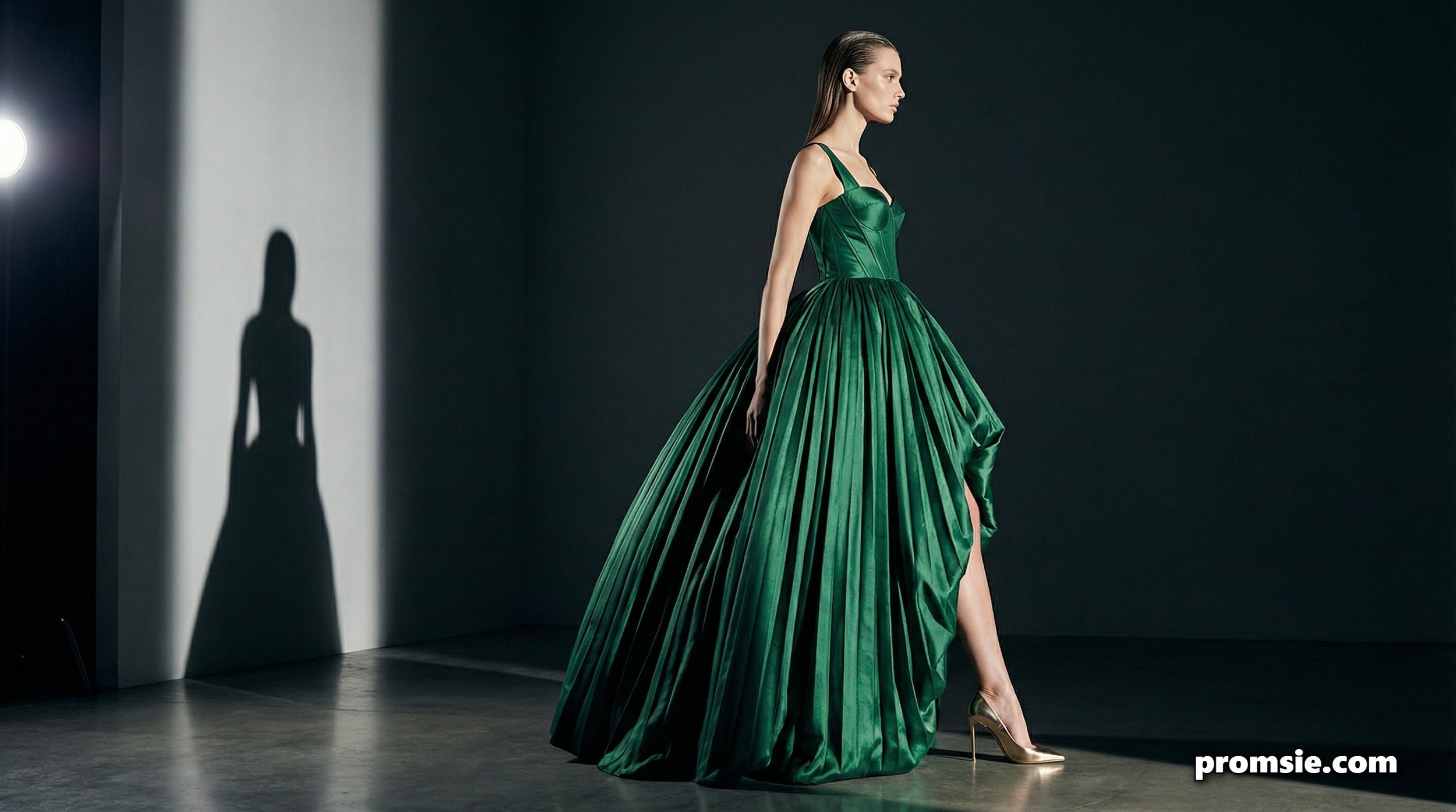
The Upper Third And The Structural Mane
Your hair is a structural element. It is not just a cute accessory that hangs out on top of your head. It carries immense Visual Weight. When we analyze the Upper Third of your body, the neckline of your dress and the shape of your hair are locked in a territorial dispute.
Take a High-Neck, Victorian collar, or a tight Halter top. Look back at nineteenth-century portraiture. High collars were designed to isolate the head as a symbol of status, demanding up-dos to show off the neck.
These silhouettes climb up the chest and eat up the skin around the collarbone. What happens when you leave thick, long hair down over a high collar? You delete the neck entirely.
You create a cluttered, suffocating frame that makes your head look like it is resting directly on your shoulders. You kill the lines of the dress immediately.
Engineering Vertical Extension For High Collars
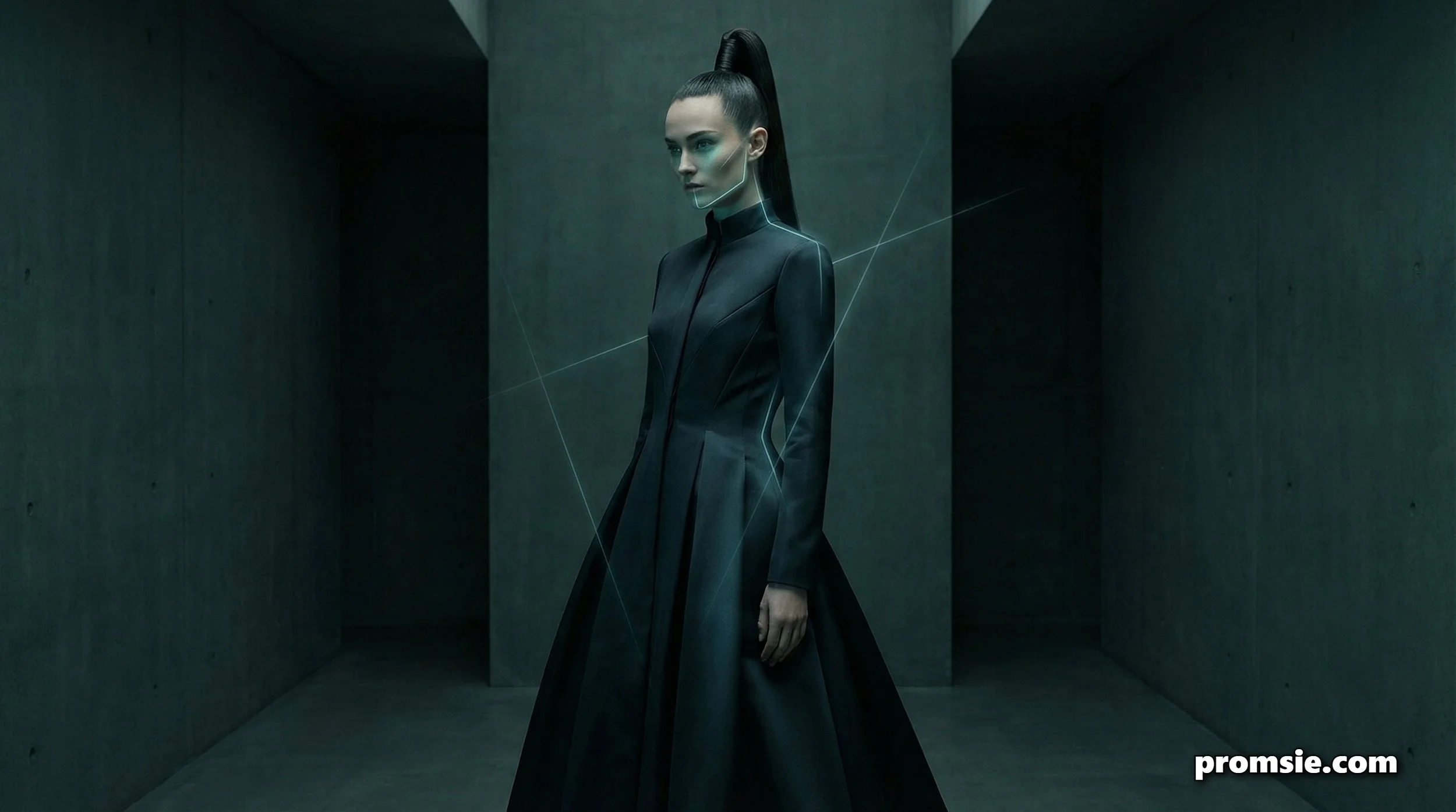
So how do you fix the suffocating collar problem? You need Vertical Extension. High necklines absolutely demand that the hair goes up. A hyper-sleek, high-tension snatched pony pulls the visual focus upward. It elongates the neck and restores the balance of the Upper Third. A tight architectural up-do does the exact same thing.
By lifting the hair away from the fabric, you allow the neckline of the garment to exist on its own. The geometry stays clean. The eye travels up the dress, past the collar, and directly to your jawline without getting stuck in a traffic jam of hair and fabric.
You are building an uninterrupted line of sight. This is a non-negotiable rule for anyone trying to pull off heavy collars or turtlenecks at a formal event.
Activating Negative Space With Deep V-Necks
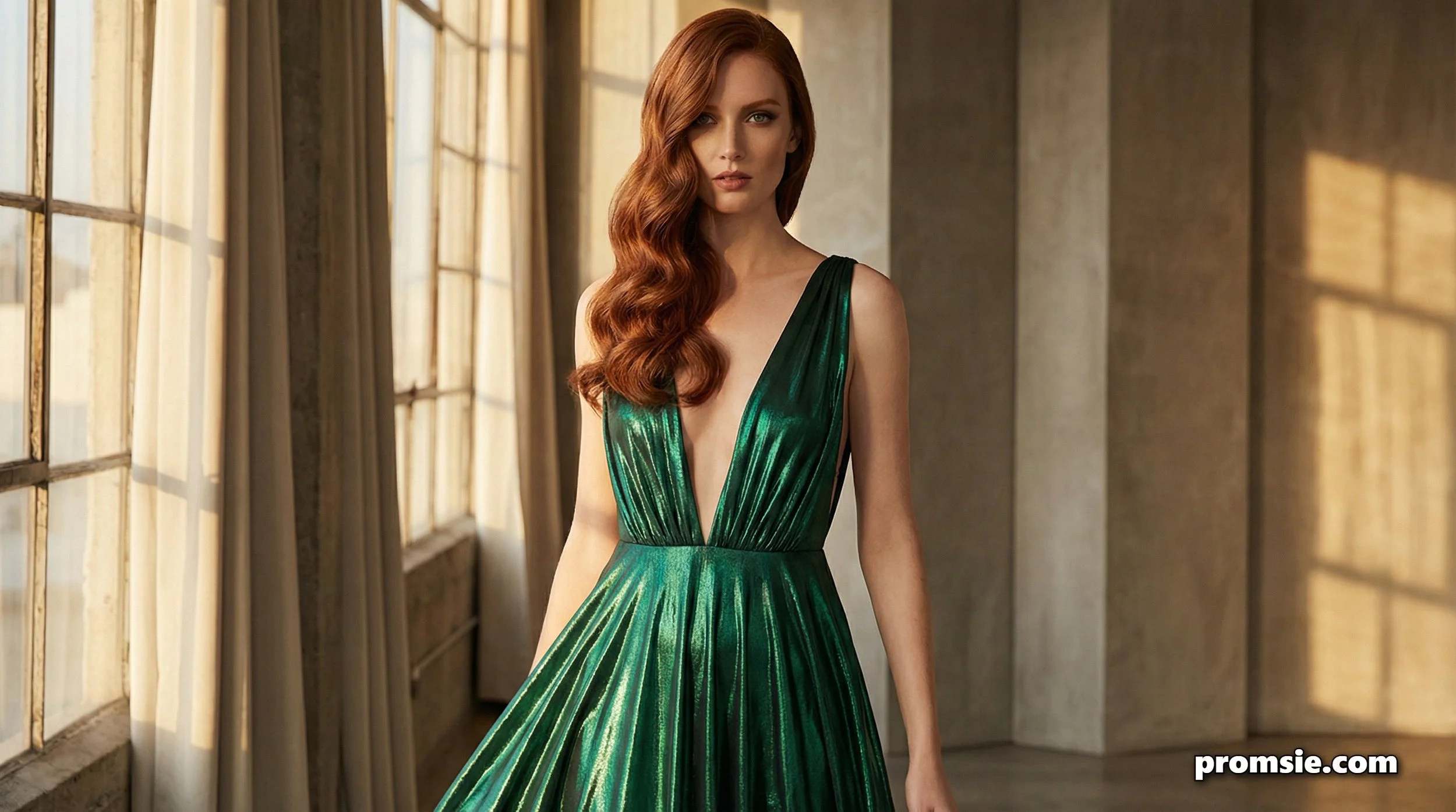
Now let us flip the script. You are wearing a Deep-V, a Sweetheart, or an Off-the-Shoulder gown. These cuts are engineered to create Negative Space. They expose a massive amount of bare skin across the chest and shoulders.
Leaving the hair in a tight bun here can sometimes make the upper half feel entirely empty or unbalanced, especially if the bottom half of the dress carries a lot of fabric. This is exactly where you bring the volume.
You can fill that bare real estate with massive waves or a Hollywood side-sweep. You are essentially using the hair as a textured scarf to balance the exposed skin. The dress subtracts volume from the top, so the hair adds it back. It is a perfect mathematical equation.
The Lower Third And The Foundation Heel
Let us move down to the base. Shoes are not just for walking. They are the foundation of the statue. If the Lower Third is wrong, the entire structure looks off-balance. Take the classic Slit-Dress. Think about the iconic red carpet moments from the nineties.
The slip dresses worked perfectly because the footwear was practically invisible. The whole point of a thigh-high slit is to create an uninterrupted line from the hip down to the floor. It demands a minimalist strap heel to extend that leg line into infinity.
If you throw a chunky, heavy platform under a sleek slit-dress, you immediately break the Vertical Flow. The eye stops dead at the ankle. You take a sleek, aerodynamic silhouette and anchor it with a cinderblock. Keep the shoe invisible or razor-sharp.
The Ballgown Equation And Height-To-Volume Ratios
Ballgowns operate on totally different physics. The shoe is rarely seen, but it still dictates the success of the dress from the shadows. This is all about the Height-to-Volume Ratio. A massive skirt carries a ton of Visual Weight.
If you wear flats or tiny kitten heels under all those layers, the fabric pools on the floor. It drags. It makes you look significantly shorter because the sheer volume of the dress overwhelms your actual vertical height.
You need a stable, high heel to lift the hem off the ground and maintain the tension of the fabric. The shoe provides the structural integrity the gown needs to float instead of sink. Do not let the dress wear you.
The Mid-Point Anchor And Hardware Conflicts
Between the hair and the shoes sits the Mid-Point Anchor. This is your waistline and your jewelry.
The biggest mistake people make here is competing with the hardware of the dress. If your gown features heavy three-dimensional lace, thick chains, or aggressive sequin patterns, your jewelry must retreat into Geometric Minimalism. Thin silver bands.
A tiny metallic stud. Do not fight the dress. But if you are wearing simple silk obsidian without any embellishments, the jewelry has permission to become the Focal Point. A massive architectural cuff or a sculptural choker can anchor an otherwise quiet garment.
Choose your fighter. You cannot have two lead singers in the same band fighting for attention.
The Rule Of Thirds And Visual Volume Check
We have a very quick way to evaluate an outfit before you walk out the door.
The Rule of Thirds for Visual Volume. It goes exactly like this. If your dress is incredibly loud, your hair must be quiet. Sleek, pinned back, strictly geometric. If your dress is quiet, minimalist, and stripped down, your hair gets to be the Volume.
It sounds incredibly simple, but you would be shocked at how many people try to pair a neon ruffled ballgown with a massive, teased blowout. It is total visual chaos.
The eye does not know where to land because everything is screaming at once. Harmony requires contrast. Quiet hair goes with loud dresses. Loud hair goes with quiet dresses.
The Mirror Test And Synchronizing The Silhouette
You think you look good close up, but fashion is absorbed from a distance. You need to do the Mirror Test. Stand five full meters back from a full-length mirror. Blur your eyes just slightly so the details fade away. What do you see? If you see hair, then a dress, then shoes as three completely separate, disconnected pieces, the sync failed. You built a collage, not a look.
You should see one Unified Silhouette. The lines should flow perfectly from the top of your head down to the floor without any abrupt stops or jarring transitions. The silhouette must read as a single, continuous shape against the background.
The Wind-Tunnel Risk And Structural Collapse
Now we need a reality check. Aesthetics do not survive in a vacuum. You have to account for the environment. I call this the Wind-Tunnel Risk. Choosing a loose, romantic down-do for a night that involves a three-hour mosh pit, high-humidity dancing, and sweating is a massive tactical error.
That hair is going to suffer complete Structural Collapse. Romantic waves only stay romantic if you are sitting perfectly still in a heavily air-conditioned room. By eleven at night, romantic just looks like messy.
It looks like you got caught in the rain without an umbrella. You have to engineer your look for the actual reality of the event you are attending.
Future-Proofing The Frame Until Two In The Morning
If the night involves high energy, friction, and large crowds, the snatched up-do is the only viable play. A slicked-back ponytail or a tightly pinned architectural bun maintains its absolute integrity for ten straight hours. It does not frizz. It does not deflate. It survives the heat of the club and still looks incredibly sharp during the two in the morning diner run.
Fashion is about endurance just as much as it is about geometry. You are building a wearable structure that needs to perform.
Lock down the grid, balance your real estate, and stop letting a bad blowout sabotage an immaculate dress.
Plan for the chaos, build the tension, and let the geometry do the heavy lifting.