The Obsidian Shift: 2026 Black Dress Run-down
So we need to talk about what is happening to the black dress right now. For years everyone treated wearing black to formal events like it was either a safety net or a hard commit to a mall-goth phase.
You threw on a dark slip dress because you ran out of ideas. Or you bought ten yards of tulle because you wanted to look like a haunted Victorian widow. We are completely wiping the slate clean for 2026.
The black dress is getting repositioned as the ultimate power move. We are calling this era Architectural Noir.
This is not about fading into the background of the gym wall. It is about treating obsidian as a literal canvas for high-end texture and insane light manipulation.
Erasing the Gothic Stereotypes
If your vibe is more subculture-driven, check our Gothic Prom Masterclass. If you're looking for the 2026 Architectural evolution, stay here. This year shifts the focus entirely from moody emotions to extreme construction and precise tailoring.
We are leaving flat, boring silhouettes behind and entering a phase where the fabric manipulation does all the talking. You want to look expensive, untouchable, and slightly intimidating.
The way to do that is by treating your dress like a piece of modern architecture rather than a throwback costume. Forget the crushed velvet. Ditch the corset ribbons and the sheer lace overlays that tear if you breathe too hard.
We are looking at clean lines, sharp angles, and fabrics that hold their own weight without drooping. A black dress should never look like an apology. It should command the room the second you step through the door.
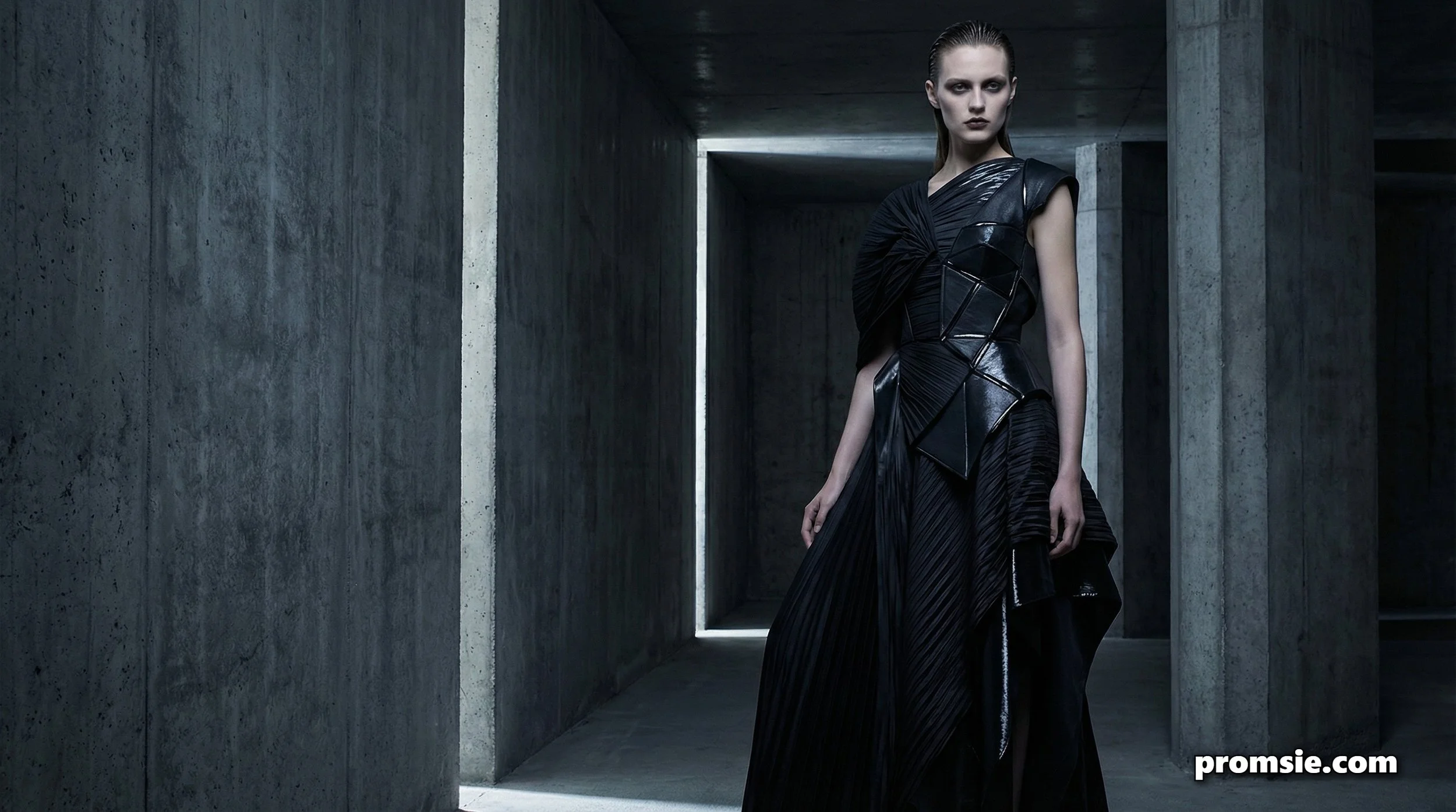
Formula A: The Liquid-Matte Hybrid
You are not just wearing one flat fabric anymore. That is a total rookie mistake when trying to pull off an all-black look. The entire 2026 trend heavily relies on extreme material contrast to keep the eye moving. You have to layer your finishes to create visual confusion in the absolute best way possible.
The ultimate play right now is combining a heavy, light-absorbing matte crepe bodice with a high-gloss liquid lame or a blinding patent leather skirt. You get this crazy split-screen effect on your body that completely redefines your proportions.
It is about mixing the ultra-traditional rigid top with a bottom half that looks like wet paint.
The difference in textures forces people to look twice. It creates an optical illusion that elongates the torso while adding incredible movement to your legs.
Why Material Contrast Dominates Low-Light Venues
Think about the lighting at your venue. It is going to be terrible.
Usually, you are dealing with some weird purple uplighting and a cheap disco ball throwing chaotic reflections everywhere. In those low-light environments, a matte top completely absorbs the room light while the gloss bottom reflects it. This creates a pulsing silhouette that literally shifts shape as you walk across the room.
People will stare because they cannot figure out how the dress is catching the light. It is basically wearable camouflage, but the kind that makes you stand out instead of blending in. You are hijacking the terrible event lighting and making it work for your outfit.
The Engineering Behind the Matte-Gloss Split
To pull off this liquid-matte division, the garment needs serious internal architecture. We broke down the exact corseting requirements for this in our Strapless Blueprint, because these high-contrast fabrics usually require internal boning to stay structured.
You cannot just tape yourself into heavy patent leather and hope for the best. It requires actual engineering. The transition line between the matte top and the glossy bottom needs to sit perfectly flat against your waist.
If the seam buckles, the entire illusion falls apart. Make sure the zipper feels heavy-duty and check the inside of the bodice for steel or thick plastic boning channels.
Formula B: 3D-Obsidian and Visual Mass
Flat fabrics are getting pushed out entirely. Nobody wants a plain column of smooth material when you can have physical depth. We are talking about visual mass. To achieve this, you need to hunt down materials that literally stand off the body.
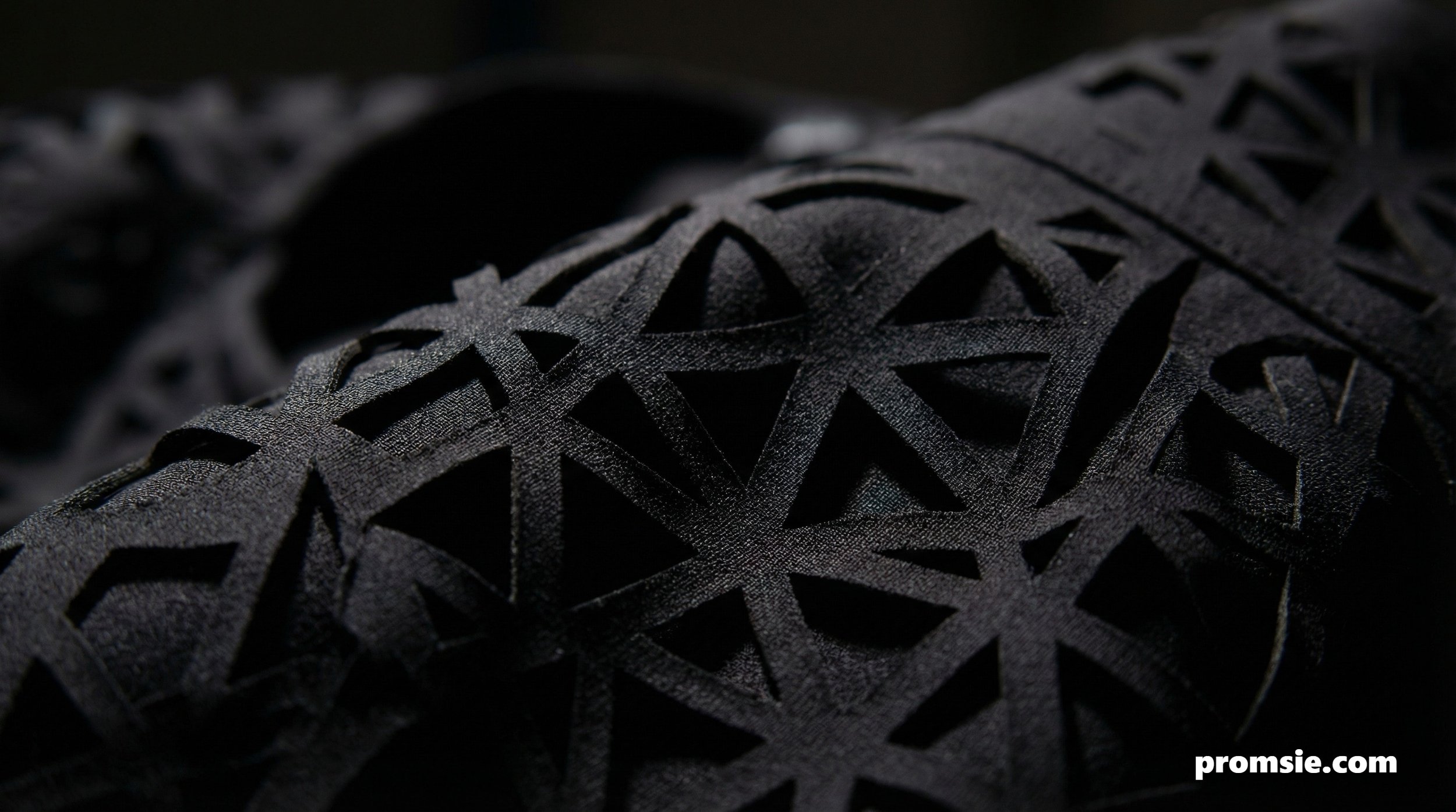
Look for black 3D lace, heavy laser-cut scales, or aggressively pleated silk that looks like complex origami. The goal is to make the dress look three-dimensional before you even put it on.
It should feel heavy in your hands. This is the exact opposite of those flimsy slip dresses from two years ago. We are building structures here. You want fabrics that hold their shape even when hung on a hanger.
Mastering the Shadow-Play Effect
When you wear a dress covered in 3D elements, you unlock the shadow-play effect.
You do not need a secondary color to make the outfit look complex. The texture alone catches the ambient light in the room, casting tiny shadows across your own dress. It makes the entire look appear wildly expensive and custom-made.
Every time you turn around, the shadows shift, making the gown look alive. You get all the visual interest of a busy print without ever straying from solid obsidian. The lack of color actually forces the eye to appreciate the intense craftsmanship.
It completely shuts down any argument that black is a boring choice for a formal event.
Formula C: The Acid-Edge Minimalist Disruption
Some of you want to stick to an ultra-minimalist black dress but still need a hyper-modern, future aesthetic.
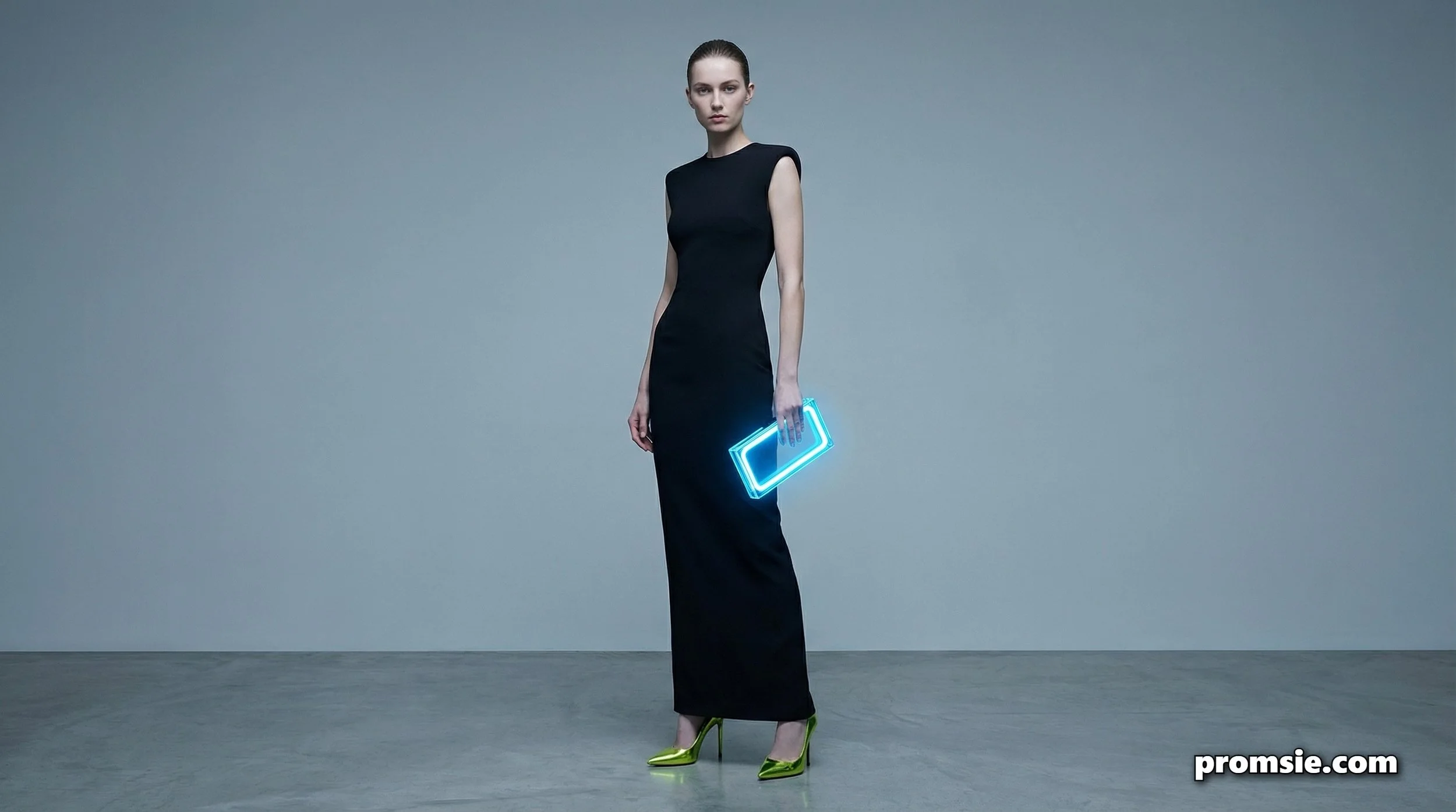
This is where the Acid-Edge formula comes into play. The math is super simple. You wear a gown that is ninety-eight percent pure obsidian, and you inject exactly two percent of a toxic glow. You are disrupting the blackout with a violently bright hardware element.
This is not about color-blocking. It is about tiny, aggressive interruptions that completely change the context of the dress. You keep the clothing dark and let the accessories scream. It is a highly calculated move that feels effortlessly cool.
Curating Toxic Glow Accessories
The accessories are what make or break the Acid-Edge look. Do not ruin this with boring gold hoops or sensible nude pumps. You need chrome heels dipped in acid lime green. Grab a singular cyber-blue acrylic earring that looks like it belongs in a sci-fi movie.
Carry a neon-reflective clutch that ruins flash photography. The whole point of these aggressive pops of color is to signal that your black dress was a highly intentional choice. It proves you did not just pick the safest option on the rack.
You built a deliberate, futuristic ensemble around a dark core. Mixing neons with architectural black instantly modernizes the entire silhouette.
The Flash-Grey Risk and The Cheap Satin Trap
We have to talk about the biggest disaster waiting to happen. Most mid-range black satin sold right now is basically a lie. It is actually high-shine polyester. To the naked eye in a dressing room, it looks completely fine.
Then you get to the event, the professional photographer hits you with a direct flash, and disaster strikes. The fabric reflects the harsh light as a dusty, cheap-looking grey.
Instead of looking like a sharp architectural silhouette, you look like you are wearing a washed-out garbage bag. The camera does not care how much you paid for it. It only sees the plastic fibers reflecting light poorly.
How to Perform the Phone-Flash Test
You have to test the garment before you swipe your card. Take out your phone, turn the flash permanently on, and snap a picture of the dress in the fitting room. Do not use a filter. If the fabric turns translucent or immediately shifts to a dusty grey on your screen, leave it on the rack.
It will not survive the night. You need to hunt for heavyweight fabrics that maintain their pitch-black depth even under the most aggressive, direct light. A true obsidian dress eats the flash instead of bouncing it back as grey noise.
Trust the audit, check your tags for heavy crepe or real silk blends, and protect your photos.
Take the extra five seconds in the fitting room so you do not hate your photos for the rest of your life.