The "Third Wheel" Survival Guide: How to Own Prom Solo
Prom season arrives with a very specific, suffocating kind of energy. The air gets thick with the smell of desperation and cheap cologne.
Suddenly, perfectly normal friendships morph into high-stakes negotiations about corsage colors and limo seating charts.
There is a pervasive, unspoken mandate floating through the hallways: pair up or perish. The pressure to secure a "Prom Date" becomes a social survival instinct, driving people to ask coworkers they barely know or reignite text chains with exes they definitely should have blocked.
But here is the reality nobody puts on the ticket. Going to prom as half of a couple is often a logistical nightmare disguised as a romance novel.
You spend the night managing someone else's expectations, holding their bag while they use the bathroom, and pretending to enjoy slow dancing to songs you hate. The alternative isn't sitting at home; it's going solo. And if you play your cards right, the solo attendee is the most powerful person in the room.
The Reframe: Why The Third Wheel is Actually the Steering Wheel
Drop the pity. The term "third wheel" implies you are an unnecessary appendage to a functioning machine. That is structurally incorrect. In the context of a high school dance, the couple is a closed loop, stuck in a repetitive cycle of checking on each other.
They are tethered. If one wants to leave, both have to leave. If one is hungry, both have to eat. They are bound by the invisible handcuffs of "shared experience."
You, on the other hand, are a free agent. You are the variable that changes the chemistry of the night.
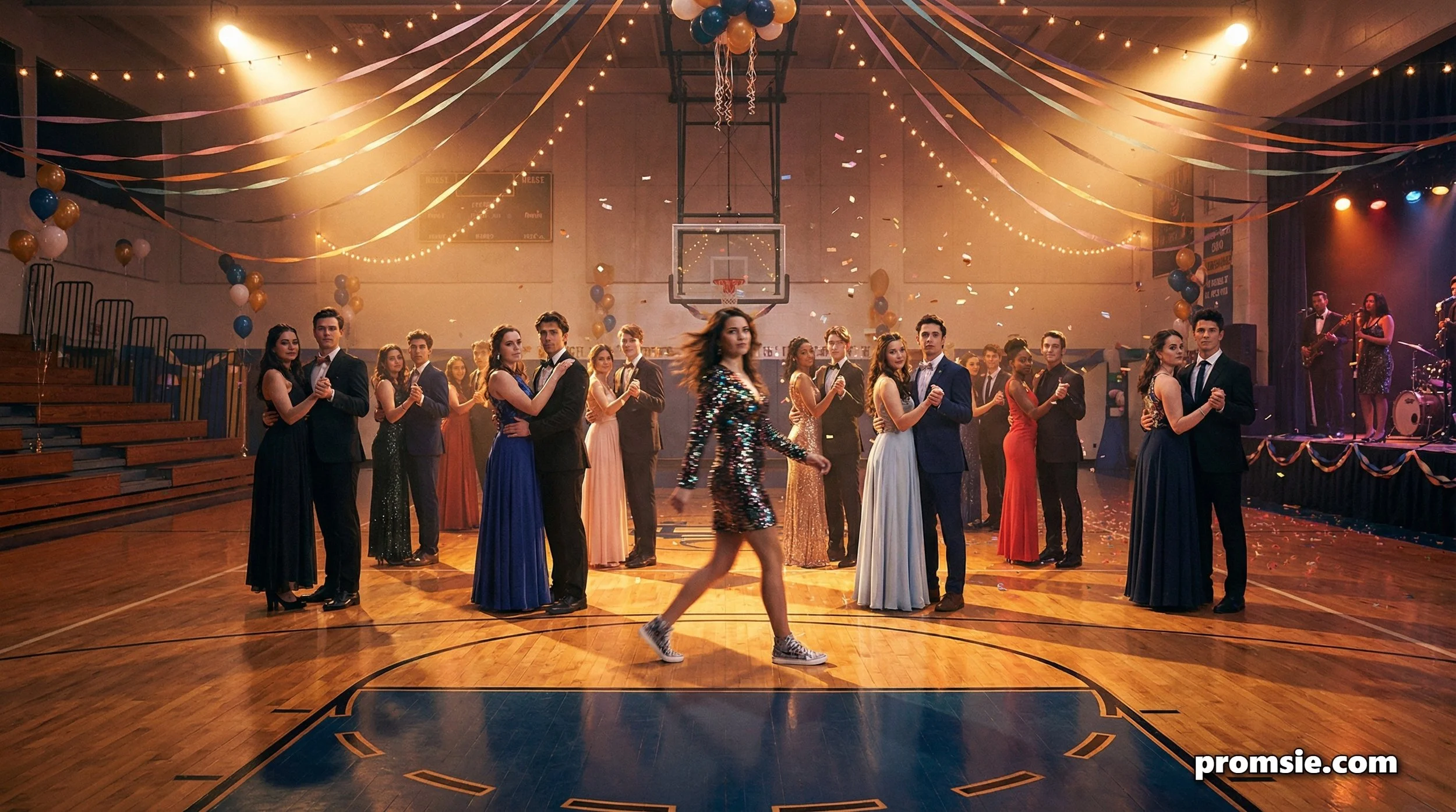
While couples are stuck frozen in awkward poses trying to get the lighting right for a post that will be deleted in three years, you are mobile. You have the ability to drift. The solo attendee sees everything, goes everywhere, and answers to no one. You aren't missing out on the "magic" of prom; you are bypassing the bureaucracy of it.
The Social Playbook: Tactical Advice for the Solo Operator
The biggest mistake solo attendees make is standing still. If you plant your feet in one spot, you become a landmark for people to pity. To own the night, you need a strategy. This is not about being the life of the party; it is about being the party's circulation system.
The "Floater" Strategy
Static targets get hit. Moving targets survive. The key to not feeling like an intruder is to never stay with one group long enough to become part of the furniture. You need to adopt the "Floater" strategy. This involves a constant, deliberate rotation between different social circles. Start with your core friend group, grab a snack, make a joke, and then physically move to the next cluster of people you know.
This movement creates an illusion of high demand. When you bounce from the football team's table to the theater kids' circle to the student council corner, you aren't looking for a place to land. You look like you are checking in on your constituents.
You become the bridge between groups that usually don't mix. The couples are stuck in their assigned seats; you are cross-pollinating the room. If a conversation gets dull or a couple starts arguing, you have a pre-built excuse: "I gotta go find [Name], I have their lip gloss." Then you vanish.
The Group Photo Hack
Photos are where the hierarchy of prom is cemented. There is a dangerous tendency for the solo person to drift to the edges of the frame, hovering like a ghost haunting the happy couples. Do not do this. The edge of the photo is the "plus one" zone. It is where people get cropped out when the Instagram carousel is curated later.
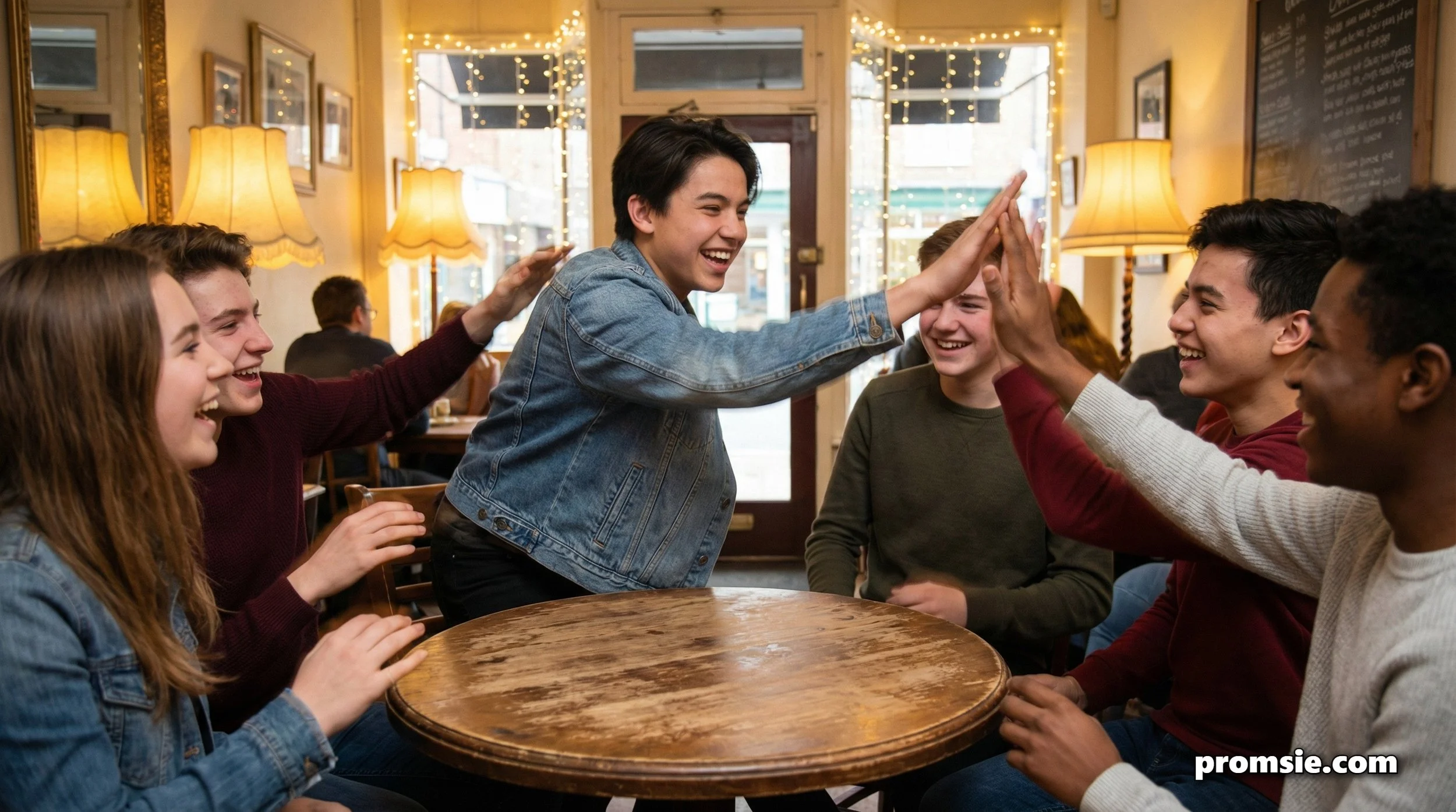
You need to claim the visual anchor point. When the photographer says "everyone squeeze in," you go low and center, or you stand directly in the middle back. By positioning yourself centrally, the composition of the photo orbits around you. You are no longer the extra person; the couples become the frame for your portrait. It’s a subtle psychological trick. When people look at the photo later, the eye is drawn to the center. If you are there, looking unbothered and happy, the narrative shifts from "they went alone" to "everyone wanted to be around them."
The Exit Strategy
Knowing when to leave is an art form. Couples often stay until the lights come on because they feel obligated to "maximize the night" after spending hundreds of dollars on tickets and flowers. They drag out the evening until it dissolves into tired arguments and sore feet.
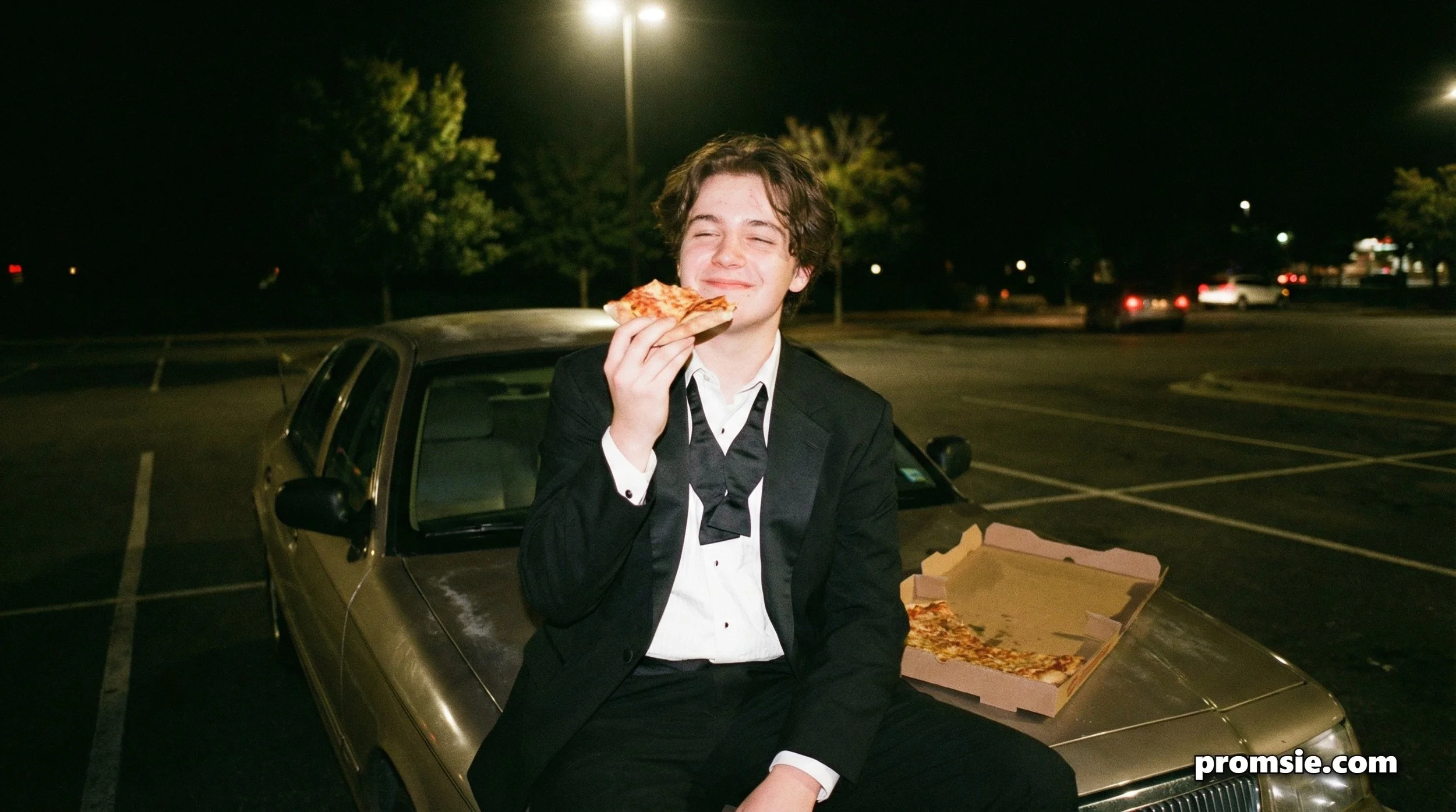
Your exit should be surgical. Leave while the energy is still high. Leave while you are still having fun. Because you have no one to consult, you can execute the perfect Irish Exit or a loud, triumphant goodbye, depending on your mood. If the DJ starts playing the slow, sentimental tracks that signal the end of the night, that is your cue. While the couples are swaying awkwardly and stepping on each other's toes, you are already in an Uber, heading to the after-party or home to order a pizza. You control the timeline.
The "Director of the Night" Mindset
Most people view high school events through the lens of a movie where they are the protagonist. The problem for couples is that they are co-starring in a rom-com that usually has bad writing. As a solo operator, you need to change the genre. You are the director.
Stop thinking of yourself as "third-wheeling" a couple. Reframe it: they are background characters in your evening. They are there to fill out the scene. This mindset shift changes your body language. You stop apologizing for your presence. You stop shrinking to make room for their drama.
The Logistics of Independence
Let's talk about the practical benefits that nobody mentions. First, the dinner menu. When you go solo, you eat what you want, when you want. No compromising on Italian vs. Sushi. No splitting a bill seven ways and subsidizing someone else’s appetizer. You are fiscally sovereign.
Then there is the transportation. The limo ride is often the most volatile part of the night. It is a confined space filled with high expectations and adrenaline. Breakups happen in limos. Tears happen in limos. As a solo rider—or someone who drove themselves—you are immune to the containment unit drama. You have an eject button.
The Outfit Advantage
Coordinate with no one. This is a massive, underrated victory. Couples are forced into color-matching schemes that rarely benefit both parties. Someone always ends up wearing a shade of teal that washes them out because it matches a dress or a tie. You have total chromatic freedom. You can wear a texture, a pattern, or a cut that is entirely self-serving. You aren't an accessory to someone else's outfit; your look stands alone. This visual independence reinforces the idea that you are a complete entity, not a fragment of a pair.
The After-Party Agility
The prompt usually ends, but the night continues. This is where the solo strategy pays the highest dividends. Couples are heavy. They move slowly. They have to debate where to go next. "I'm tired," says one. "But my friends are at the bonfire," says the other. Friction ensues.
You are agile. If the bonfire is lame, you go to the diner. If the diner is crowded, you go to the house party. You can jump into any car, join any crew, and change your mind five times in an hour. The best stories from prom night rarely happen on the dance floor; they happen in the chaotic hours between midnight and dawn. By being unattached, you increase your probability of being present for the legendary moments.
So, when the slow songs start and the couples drift to the floor to sway in circles, don't retreat to the bathroom to check your phone. Go to the snack table. Raid the chocolate fountain.
Laugh at the absurdity of it all. You haven't failed at prom because you didn't bring a date. You've hacked the system. You surrendered the stress to keep the freedom, and that is a trade worth making every single time.