Junior vs. Senior Prom: Promsie’s Guide to Differences, Traditions & Etiquette
Picture this: It is mid-February. The hallways are buzzing. Someone just got asked to the dance with a giant teddy bear holding a pizza box.
But then you hear whispers about "tickets for the juniors" versus "the senior dinner." Suddenly, you are spiraling. Are there two proms?
Do you have to buy two dresses? Is one a big deal and the other just a glorified homecoming?
Take a breath. You are not the only one confused.
For decades, high schools have split these events to mark different milestones. While movies usually mash them into one glittery montage, real life works a bit differently.
Understanding the distinction between the Junior Prom (often called the "warm-up") and the Senior Prom (the "grand finale") saves you from showing up underdressed, over-budget, or accidentally breaking an unwritten social rule.
Here is the lowdown on what separates these two iconic nights.
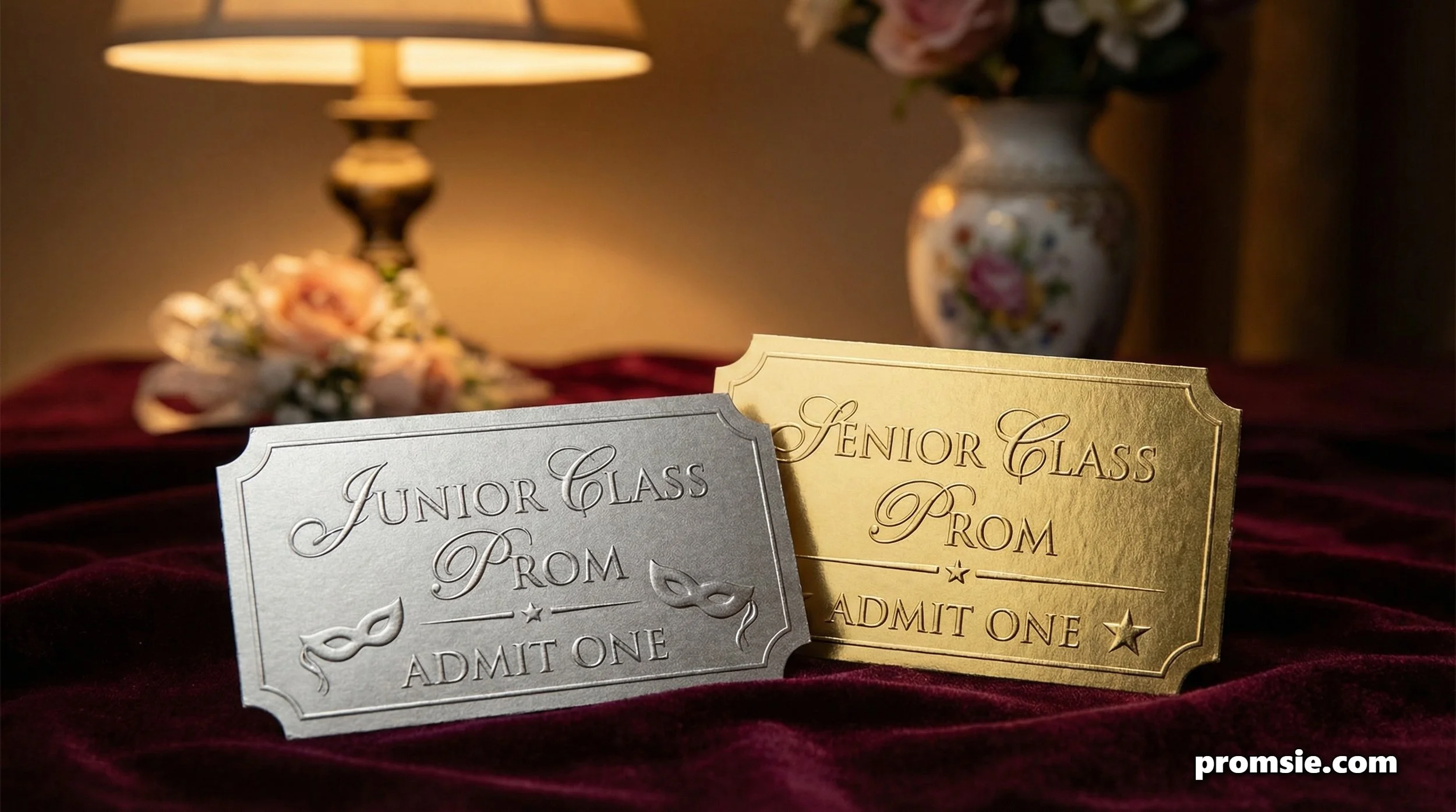
The Vibe Check: Party vs. Pageantry
The biggest difference is not the music or the punch bowl. It is the energy in the room.
Junior Prom is often the practice run. It feels lighter, less high-stakes, and honestly, a little more chaotic in a fun way. Think of it as the night where you figure out if you actually like dancing in heels or if you need to stash a pair of sneakers in your bag. The pressure is lower because you know you have another shot next year. At many schools, the junior class officers plan this event, sometimes as a fundraiser for the senior prom. Because of that, the venue might be the school gym or a local banquet hall rather than a downtown hotel ballroom.
Senior Prom is the Oscars. This is the last time the entire class gathers before graduation caps fly. The air feels different—heavy with nostalgia and expensive perfume. You will see people crying in the bathroom not because of drama, but because they just realized they might never see their lab partner again. The formality spikes. The dinner is plated, not buffet. The venue is likely the fanciest place the school could book within a thirty-mile radius. You are not just there to dance; you are there to say goodbye.
The Look: Short, Long, and Everything in Between
Dress codes cause the most panic. Can you wear a long gown to Junior Prom? Is a short dress okay for Senior Prom?
For the Juniors
Historically, Junior Prom leaned semi-formal. You would see a lot of cocktail dresses, high-low hems, and suits that were nice but not necessarily tuxedos. That line has blurred recently. Nowadays, you will see plenty of floor-length gowns at Junior Prom, but they tend to be simpler. Think sleek silhouettes, playful colors, or flowy fabrics rather than heavy beading and trains.
If you are a junior attending Senior Prom as a guest, this is where it gets tricky. The golden rule? Do not outshine the seniors. If you show up in a white ballgown with a tiara, you will get side-eyed. Aim for elegant but understated. You want to fit in, not look like you are trying to steal the crown.
For the Seniors
This is full glam. We are talking red carpet. Senior Prom is the time to pull out the stops with sequins, intricate beadwork, and dramatic trains. If you have been eyeing those prom dress styles for 2026 that look like they belong in a magazine editorial, this is the night to wear them. Tuxedos are standard for the guys—often with matching vests or bowties that coordinate with their date's outfit.
There is also a psychological shift. Freshman and sophomore year dances are about fitting in. By Senior Prom, people care less about trends and more about personal style. You will see vintage suits, custom-made gowns, and sneakers paired with couture. It is a final expression of identity before heading off to college or the workforce.

The Cash: Budgeting for Round One vs. Round Two
Let’s talk money. Prom is an investment. Doing it twice can drain your savings account faster than you can say "limousine rental."
Junior Prom is usually the budget-friendly version. Tickets are cheaper because the venue is less extravagant. You might drive yourself or carpool with a group rather than renting a party bus. Dinner might be a favorite chain restaurant instead of a steakhouse. This is the smart move. You get the experience without the massive price tag, allowing you to save up for the following year.
Senior Prom is where wallets weep. Tickets can cost double or triple what you paid the year before, often covering a sit-down meal and higher security costs. Then add in the "promposal" (which has become its own line item), professional photography, hair, makeup, and transportation. It is not uncommon for families to start a "prom fund" early in the year.
If you are stressing about the numbers, you are not alone. There are ways to hack this. Renting a tux or dress is valid. Doing your own makeup is valid. Skipping the limo for an Uber XL is valid. Check out our [prom budget planner](https://promsie.com/blog/prom-budget-planner) to see exactly where you can cut corners without killing the vibe.
The "Plus One" Situation
Who you go with shapes the night just as much as what you wear.
Junior Year: The "Group Date" reigns supreme. You pile ten friends into a minivan, take photos in someone's backyard, and spend the whole night dancing in a circle. There is less pressure to have a romantic date. If you do have a date, it’s often casual. It’s about the squad.
Senior Year: The pressure to pair up intensifies. "Promposals" are everywhere. People who have been single for four years suddenly scramble to find a partner. However, going stag or with a group of friends is still totally normal—and often more fun. The difference is the intention. Senior Prom groups are tight-knit. These are the people you survived high school with. The photos you take aren't just for Instagram; they are keepsakes.
If you are planning a massive ask, make sure you read the room. Public proposals are great if you know the answer is yes. If you are unsure, maybe keep it private.
Traditions: The Grand March and The Court
Some traditions are universal; others are weirdly specific to your town. But generally, the rituals differ by year.
The Grand March
In many small towns, the Grand March is the main event for the community. Couples walk across a stage or down a red carpet while parents and neighbors snap photos. This is often more associated with Senior Prom, or a combined event. If your school does this, be prepared for blinding camera flashes and your aunt screaming your name from the bleachers.
Royalty
Yes, the crown. Junior Prom often elects a Prince and Princess. It is an honor, sure, but it feels like a popularity contest lite.
Senior Prom is the coronation of the King and Queen. This carries weight. It is often based on school spirit, kindness, or just being a well-known face on campus.
The dance usually stops for this announcement. If you win, you get a crown, a sash, and a slow dance in the spotlight. If you don't, you clap and go back to the chocolate fountain.

Etiquette: The Unwritten Rules
Nobody hands you a rulebook when you buy your ticket, but these social laws exist.
1. Juniors at Senior Prom:
If you are an underclassman invited by a senior, remember you are a guest in their house. Let them lead. Let them choose the table. Do not complain about the music. And definitely do not try to start drama with a senior who is graduating in a month. It is not worth it.
2. Seniors at Junior Prom:
Sometimes seniors crash Junior Prom (or are invited). The rule here is: Be cool. Do not act bored or superior just because you have "been there, done that." If you are going, commit to the fun. But also, step back. Let the juniors have their moment in the sun.
3. The After-Party:
Senior after-parties are legendary and often involve weekend trips or all-night lock-ins organized by parents to keep things safe. Junior after-parties are usually just… pizza at someone’s house. Don’t expect the same level of freedom or scale until you have earned those senior stripes.
So, Which One Matters More?
It is easy to hype up Senior Prom as the only one that counts, but that is not fair.
Junior Prom is the experimental phase. It is where you learn how to pin a boutonniere without stabbing anyone. It is where you realize that spray tans need 24 hours to set before you put on a white dress. It is messy and loud and brilliant.
Senior Prom is the victory lap. It is polished and sentimental. It is the closing chapter.
Here is the reality: You might have more fun at Junior Prom because the expectations are lower. You might cry at Senior Prom because the reality of leaving hits you during a slow song. Both are valid. Both are part of the story.
Don’t overthink it. Wear the shoes (but bring band aids). Eat the dinner (even if it is rubbery chicken). Take the photos. Because in ten years, you won't remember the theme or who won King and Queen.
You will remember how you felt when the lights went down and the bass kicked in.