How to Style High-Slit Dresses with Knee-High Boots: Promsie Footwear Guide
Updated 5-Jun-2026
Prom used to follow a strict, boring formula: buy the gown, dye the matching satin heels, and pray you didn't trip over your own hemline on the stairs.
That era is dead.
High school style has completely shifted toward raw, red-carpet editorial looks, and the absolute loudest silhouette right now is a dramatic, high-slit dress paired with heavy, knee-high boots.
It completely flips the script. It takes an outfit from predictable "pretty princess" and turns it into something grounded, sharp, and intentionally rebellious. But pulling this off isn't as simple as tossing a pair of worn-out combat boots under a ballgown. Making it look high-fashion instead of accidental requires a quick lesson in visual weight, fabric drape, and proportions.
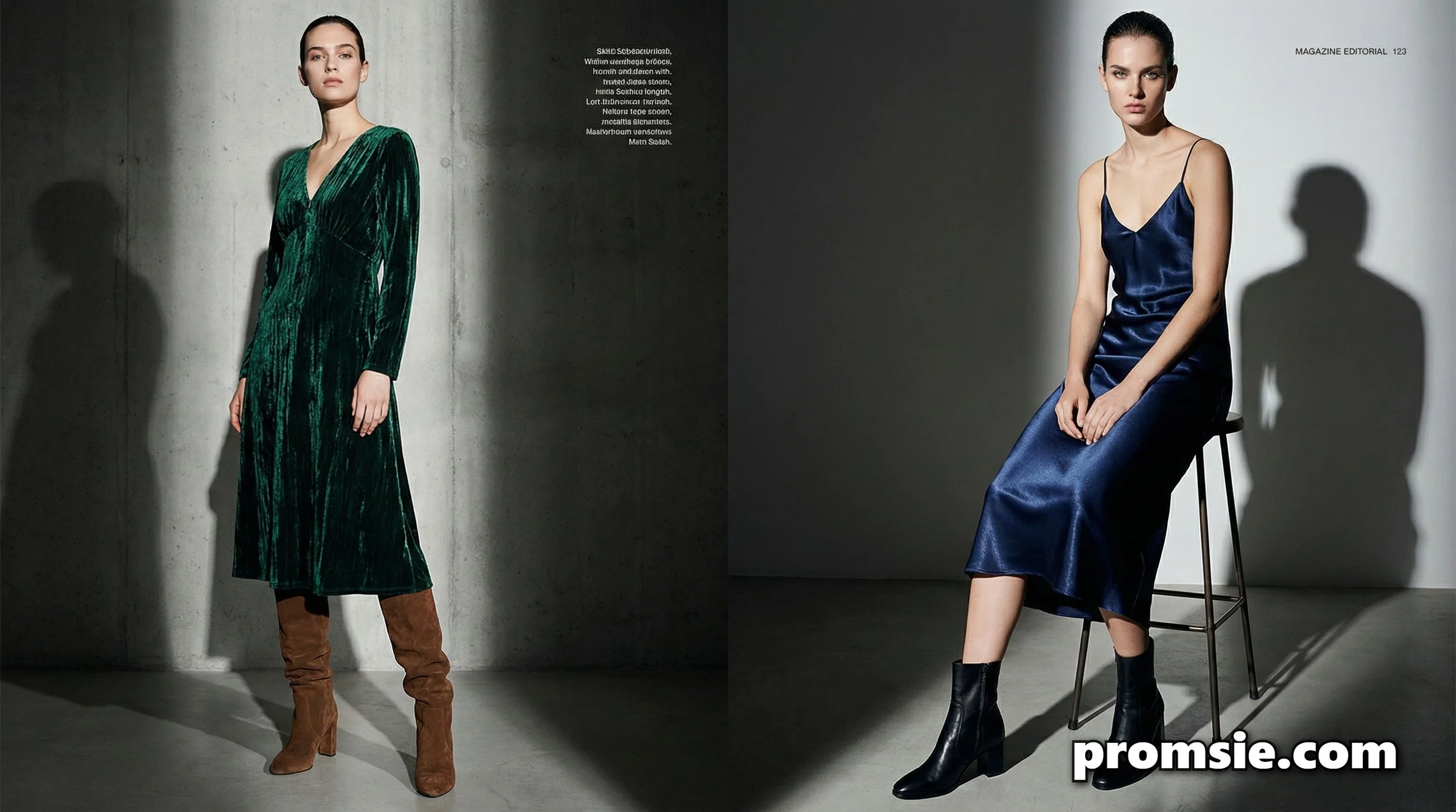
The Proportions & Movement Rule
When pairing a high-slit dress with structured boots, the biggest mistake is fabric snagging. If your dress is made of a lightweight material like silk, satin, or fine mesh, the hemline will constantly catch on the zippers, buckles, or rough leather of your boots as you walk. To keep the fabric draping beautifully and smoothly, choose sleek, pull-on sock boots or styles with hidden, flat-track interior zippers.
The Architecture of the Slit
Not all slits are created equal, and when you plan to introduce a boot into the equation, the cut of the dress dictates everything. You have the classic side slit, the double slit, and the center front slit.
For the tall boot aesthetic, the side slit is the only one that truly makes sense. A center slit with boots tends to look too much like a costume from a fantasy RPG, and double slits can get tangled in the shaft of the boot when you walk.
You need a slit that starts high enough to clear the top of the boot when you are standing still, or at least creates a deliberate overlap. If the slit starts at the knee and your boots end at the knee, you create a weird visual block that cuts your leg in half.
The goal is to create a vertical line that draws the eye from the hip down to the floor. The slit acts as a frame for the boot. If the frame is too small, the picture—your killer footwear—gets lost.
The Boot Height Equation
Choosing between knee-high and over-the-knee (OTK) styles changes the vibe completely. Knee-high boots leave a significant amount of skin exposed when the dress moves.
This is the more classic, manageable approach. It feels slightly more punk rock, especially if the boots have a chunky sole or hardware. It says you are ready to stomp through the night rather than glide.
Over-the-knee boots, on the other hand, create a seamless transition. If you are wearing a black dress with black OTK boots, you essentially create a legging effect that elongates the body.
This is a safer bet if you are worried about showing too much skin, but it can also read a bit heavier. The key here is fit. If your OTK boots are slouchy, they will clash with the clean lines of a formal gown. You want a sock-boot fit or structured leather that stands up on its own. A slouchy boot creates horizontal wrinkles, which kills the vertical momentum of the high slit.
The Skin-Gap Ratio
This is the most technical part of the look and usually where people mess up. The "Skin Gap" is the visible space between the top of the boot and the point where the dress fabric naturally falls or splits.
You have to manage this negative space. If the gap is huge—say, six inches or more—the boots can look like an afterthought, like you just forgot your heels. It disconnects the shoe from the outfit.
Ideally, you want a dynamic gap. When you stand still, the dress might graze the top of the boot. When you walk or pose, the gap opens up to reveal two to three inches of thigh. This flash of skin prevents the outfit from looking like a solid block of fabric while maintaining the mystery.
If you are going for the thigh-high boot look, the gap might disappear entirely, creating a fabric-on-leather look that is incredibly sleek. Just make sure the textures don't fight each other.
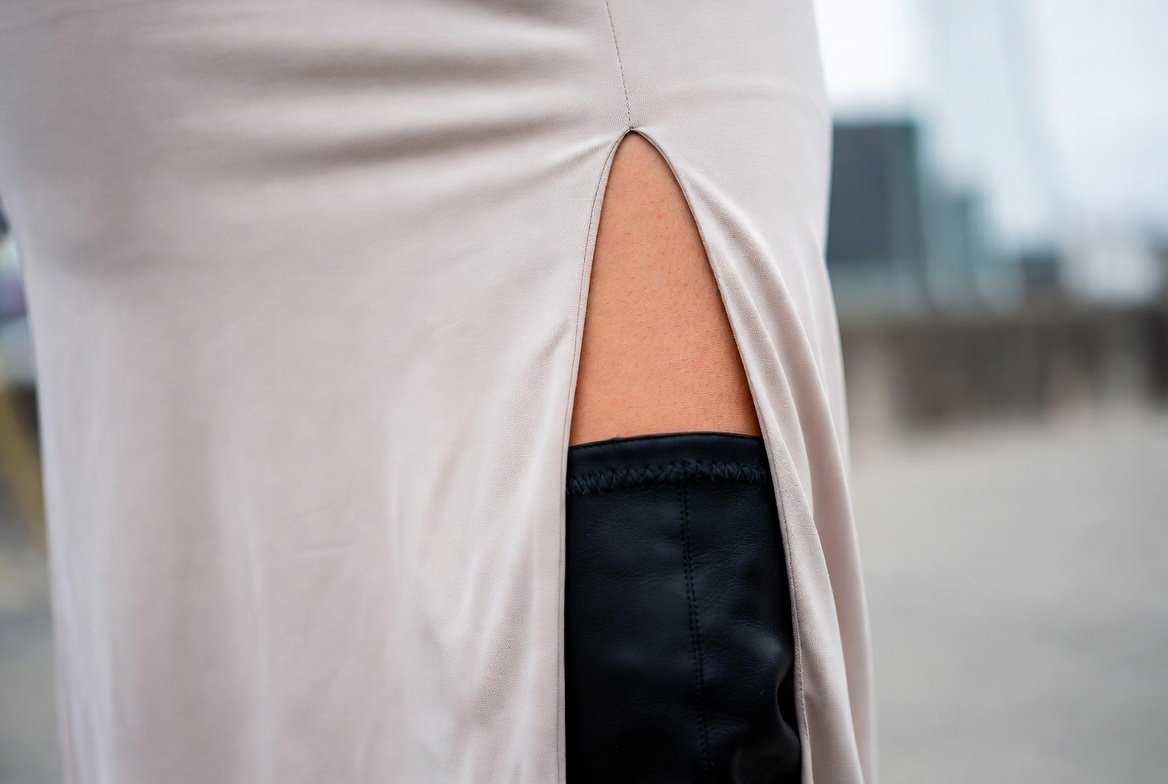
Fabric Friction and Physics
Here is a reality check nobody talks about until they are on the dance floor: static and friction. When you wear tights or bare legs with heels, a dress glides. When you introduce a leather, suede, or patent boot shaft, you are introducing a high-friction surface. A satin dress will cling to a suede boot like it is glued there. A chiffon layer might get caught on the zipper or buckle of a combat boot.
You have to prep the materials. If you are wearing suede boots, wear a slip underneath or use ridiculous amounts of anti-static spray. If your boots have hardware—buckles, studs, zippers on the outside—you need to be extremely careful with lace or tulle dresses. One wrong move and you have ripped the hem of your rental. Test drive the walk at home. If the dress keeps getting bunchy between your legs because it is sticking to the boot, you might need to weigh down the hem of the dress or choose a heavier fabric like velvet that holds its own against the boot.
Managing Proportions and Visual Weight
Boots are visually heavy. A delicate strappy sandal disappears, but a platform knee-high boot demands attention. Because you have added so much weight to the bottom of your silhouette, you need to balance it out on top. A strapless, flimsy bodice might look unbalanced with heavy stompers.
Try to echo the weight of the boots in your upper half. This could mean a dress with sleeves, a high neckline, or even just darker makeup and heavier jewelry. If you are wearing a delicate slip dress, throw on a leather jacket for photos to bridge the gap between the soft dress and the hard shoes. It is all about equilibrium. You don't want to look like you are sinking into the floor because your shoes are visually heavier than the rest of you.
The Fabric & Height Balance Matrix
| Gown Silhouette | Best Boot Height | Boot Material Strategy | The Style Rule |
|---|---|---|---|
| Thigh-High Slit | Knee-High (Just below the knee) |
Matte Leather or Suede | Creates an intentional gap of skin between the top of the boot and the start of the slit to keep the look perfectly balanced. |
| Mid-Thigh Side Slit | Over-the-Knee (OTK) |
Fitted Stretch Patent or Leather | The boot should seamlessly disappear up into the dress fabric, creating a clean, elongated leg line. |
| Asymmetrical Split | Mid-Calf (Combat Boot style) |
Chunky, Textured Leather | Adds an edgy, casual contrast to a formal dress style. Perfect for alternative evening or festival wear. |
The Color Theory of Continuity
Monochromatic looks are the easiest way to slam dunk this aesthetic. Red dress, red boots. Black dress, black boots. This creates an unbroken line that makes you look seven feet tall. It is high-fashion and very intentional. However, contrast is where the personality lives.
A pastel dress with heavy black combat boots is a staple grungier look, but for prom, you might want to elevate it. Metallic boots are a massive power move. Silver knee-highs with a cool-toned blue or purple dress look futuristic. White boots with a dark dress give a 60s mod energy. Just avoid cutting your leg line in a weird place. If you wear a mid-length dress with ankle boots, you look shorter. Stick to the extremes: very long dress, very tall boots.

Avoiding the Pirate Effect
There is a very thin line between high-fashion and Captain Hook. The "Pirate Effect" happens when you combine a high slit, tall boots, and too many ruffles or billowing sleeves. If the boots have a wide, folded-over cuff (the fold-over style is trendy right now), and your dress has poet sleeves, you are officially in costume territory.
To avoid this, keep one element sleek. If the boots are wide and slouchy, the dress should be streamlined and architectural. If the dress is a romantic, ruffly cottage-core nightmare (in a good way), keep the boots tight to the leg and combat-style rather than cuffed.
Contrast the eras. Don't wear a period-piece dress with period-piece looking boots unless you are literally going to a themed party.
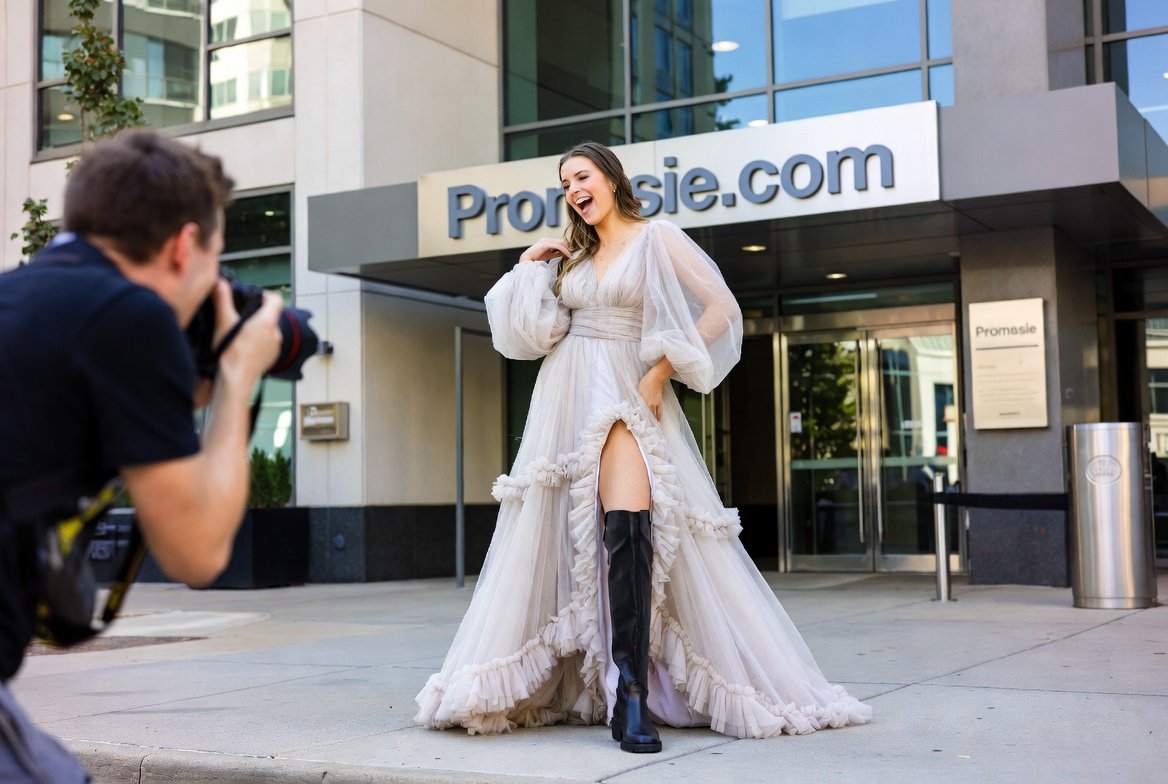
The Posing Mechanics
You cannot pose in boots the same way you pose in heels. The classic "beveled foot" (popping one knee) looks different when your ankle is encased in leather. In heels, you extend the toe to elongate the leg. In boots, specifically platform ones, pointing your toe doesn't do much because the shoe is flat.
Instead, focus on the "Power Stance." Plant your feet slightly wider than shoulder-width and shift your weight to one hip. Let the dress fall open naturally. For the walking shot—which you definitely need—kick the booted leg out slightly more aggressively than you normally would to ensure it clears the fabric.
You want the boot to catch the light. If you are sitting, cross the legs high so the slit falls away, exposing the full boot. Do not let the dress drape over the boot while sitting, or it just looks like you have bulky shins.
A Note on Socks and Comfort
One of the biggest wins of this aesthetic is comfort, but only if you play it smart. Boots can get hot. You are dancing in a sweaty gym or ballroom. Wear moisture-wicking socks. Seriously.
Nobody will see them inside the boot. If you are wearing leather boots for six hours, your legs will sweat, and you will slide around inside the shoe.
Also, consider the calf fit as the night goes on. Feet swell. If your boots are impossible to zip up at 4 PM, they are going to be torture devices by 10 PM. Go a half-size up to accommodate thicker socks and swelling. You have the advantage over the girls in stilettos—you have arch support and ankle stability. Use it to your advantage on the dance floor.
The Hidden Sock Rule
When wearing a high-slit dress, remember that the slit moves dynamically when you walk, sit, or dance. If you are wearing thick athletic socks, bright patterns, or comfort compression socks inside your boots, they will flash through the slit opening at some point during the night. Always wear low-profile, no-show liner socks, or match your socks exactly to the color of your boot shaft to keep the visual line perfectly seamless.
Can You Wear Boots to Prom?
Generations before us were told that evening wear meant delicate satin pumps. That rule is dead. Fashion is about the juxtaposition of hard and soft, masculine and feminine, utility and glamour. Pairing a high-slit gown with heavy boots is an assertion of confidence. It says you prioritized your own vibe over tradition.
Don't let anyone tell you it looks "clunky" or inappropriate. If the proportions are right and the confidence is there, it looks editorial. It looks like you got dressed with a stylist rather than a department store mannequin.
Wear the boots, take the stride, and enjoy being the only person who doesn't have to carry their shoes out to the car at the end of the night.