The Promsie Dress Fit Guide: How to Measure for a "Zero-Alteration" Fit
Why measuring your Bust, Waist, and Hips isn't enough—and the "Vertical Fit" secret to saving money on hemming.
Introduction: The "Three-Number" Myth
You’ve probably seen a million guides online telling you that all you need to find your perfect prom dress size is a tape measure and three numbers: your bust, your waist, and your hips.
They make it sound so easy, right? Just match the numbers to the chart, and boom—you’re ready to go.
Here is the harsh reality: That is a lie.
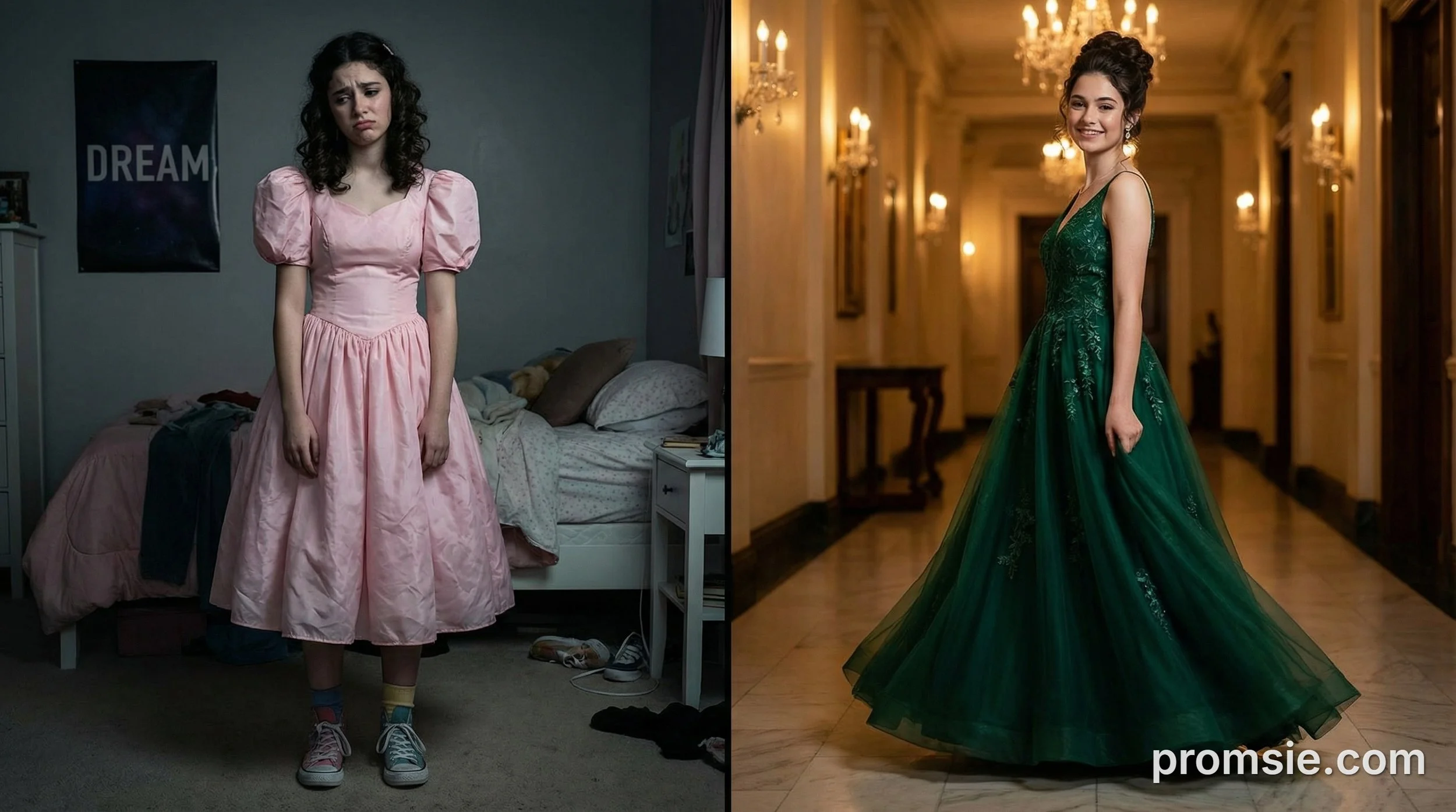
If you only rely on those three circumference measurements, you are playing a dangerous game of fashion roulette. We have seen it happen too many times: the dress arrives, and while it zips up perfectly, it stops three inches above your ankles, looking like accidental high-waters.
Or worse, it’s dragging on the floor so much that you look like a toddler playing dress-up in your mom’s closet.
The problem? Buying based on width alone totally ignores your height and the dress’s vertical silhouette. Dresses are 3D objects, and you are a 3D human. We need to measure top-to-bottom, not just side-to-side.
Enter the "Vertical Fit Protocol." This is the secret sauce that professional stylists use. It accounts for your torso length, your total height, and—most importantly—your shoes.
What You’ll Need:
A soft measuring tape (steal one from your mom’s sewing kit).
A full-length mirror.
A friend (seriously, do not try to do this solo, you will mess it up).
The EXACT shoes you plan to wear (or ones with the exact same heel height).
Let’s get into the stuff the other guides are forgetting to tell you.
The "Vertical Fit" Protocol (What Most Guides Miss)
This is the game-changer. While your competitor might be stressing about your waistline, we are focusing on the length. Why? Because hemming a multi-layered tulle gown can cost you upward of $100. If we get this right, you save that cash for the limo or the glam squad.
1. The Critical "Hollow to Hem" Measurement
You might have seen the phrase Hollow to hem on size charts and ignored it. Don't. This is your holy grail for length.
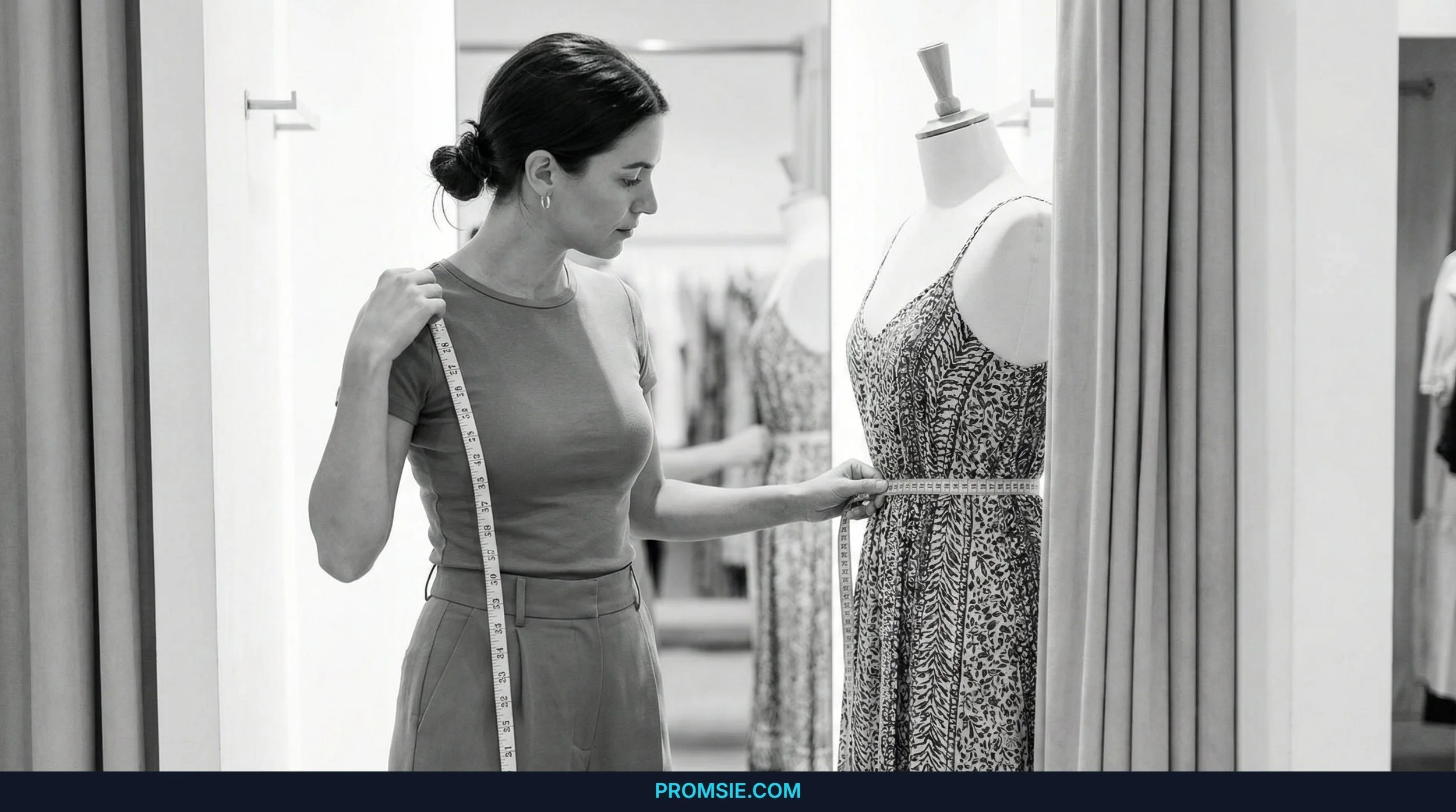
Definition: This measures the length from the "hollow" of your neck (that little dip between your collarbones) all the way down to where the dress hits the floor. It determines if a dress will be a true floor length gown on your specific body.
How to Measure:
1. Stand up straight. Shoulders back, chin up like you own the place.
2. Find the hollow spot between your collarbones at the base of your neck.
3. Have your friend place the start of the tape measure right in that hollow dip.
4. Tell them to pull the tape straight down (vertically) to the floor.
The "Heel Height" Rule:
Here is the part everyone forgets. You are not going to prom barefoot (at least, not until the DJ starts playing the throwbacks).
CRITICAL STEP: You must wear your intended heel height during this measurement.
If you measure barefoot and you are 5'4", and the dress is made for someone who is 5'9", you might think you are fine. But if you slap on 4-inch platforms, suddenly that dress is floating off the ground. By measuring with your heels on, you get the true vertical measurement needed for a perfect graze-the-floor look. This saves you from the expensive headache of hemming a dress that is too long or the heartbreak of returning a dress that is too short.
2. Torso Length and Waist Placement
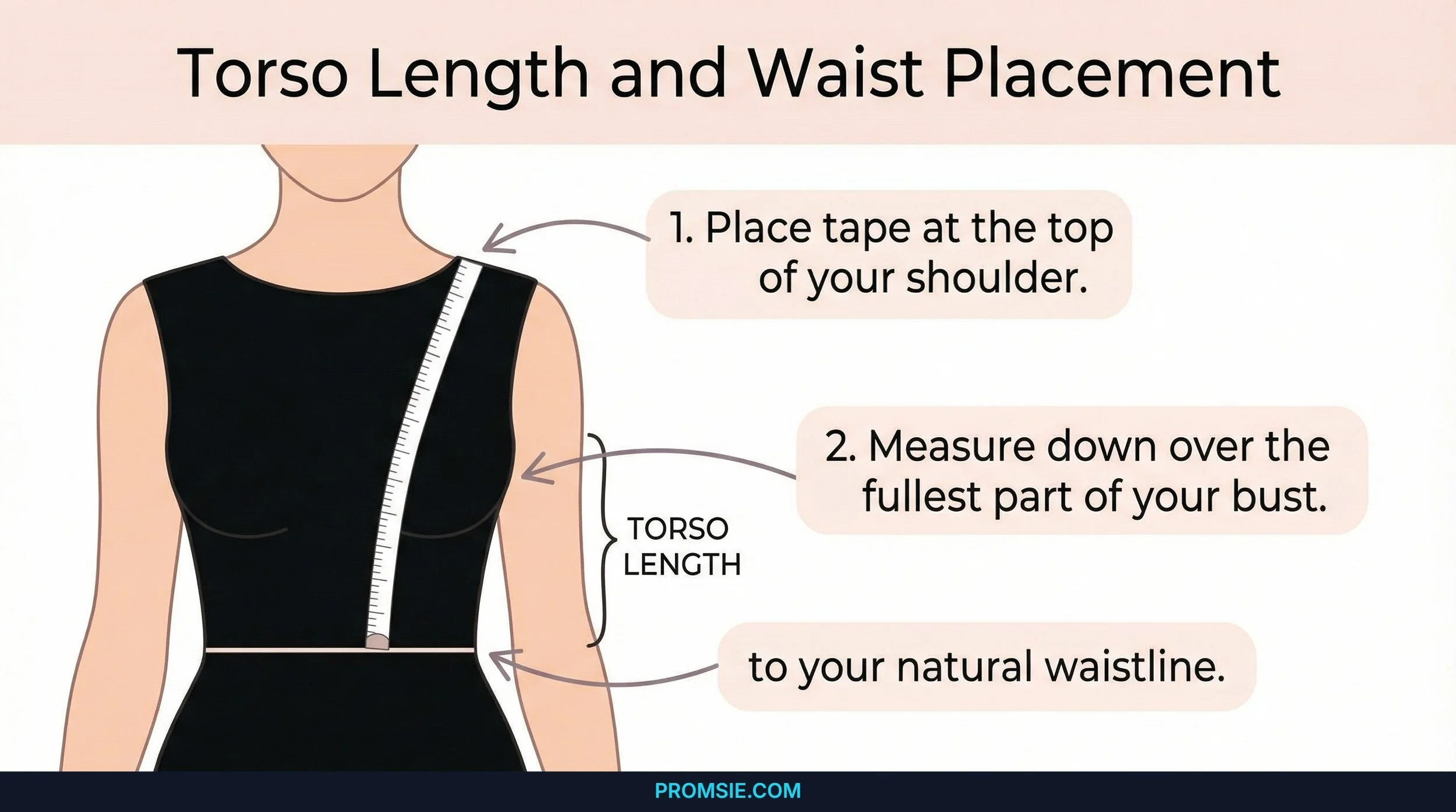
Ever put on a dress and feel like the waistline is hitting your ribcage? Or maybe it’s sagging down on your hips? That is a torso length issue.
Why it Matters: Not all waists are created equal. You might be the same height as your BFF, but if you have a "long torso" and shorter legs, a standard dress waist might sit too high on you.
How to Measure:
1. Place the tape at the top of your shoulder (where a strap would sit).
2. Measure down over the fullest part of your bust to your natural waistline.
Vertical Measurement Check: Compare this Torso length number against the dress description or size chart. If you have a long torso, you need to ensure the bodice length is sufficient so it doesn't pull or bunch up. It’s all about keeping the silhouette smooth.
Mastering the Standard Circumference Measurements
Okay, now that we have handled the vertical stuff that the other guys missed, let's quickly crush the standard measurements. But we’re going to do it with a bit more precision.
1. The Bust (Not the Bra Size)
Repeat after me: My bra size is not my bust measurement.
If you wear a 34C, your measurement is not 34. A 34 band size measures your ribcage, not the fullest part of your chest. If you order a size based on your bra band, you are going to be unable to zip that dress up.
How to measure: Wrap the tape around your back and across the fullest part of your bust. Keep the tape parallel to the floor. Breathe naturally—don't hold your breath unless you plan on not breathing all night.
The Underbust Check:
If you are eyeing an empire waist gown (where the skirt starts right under the chest), you need to know your Underbust measurement.
Instruction: Measure directly under the bustline, right where your bra wire would sit. This is vital because if the ribcage band is too tight, you’ll be uncomfortable all night.
2. The Natural Waist vs. The Drop Waist
Finding your waist can be tricky. It is not necessarily where your jeans sit.
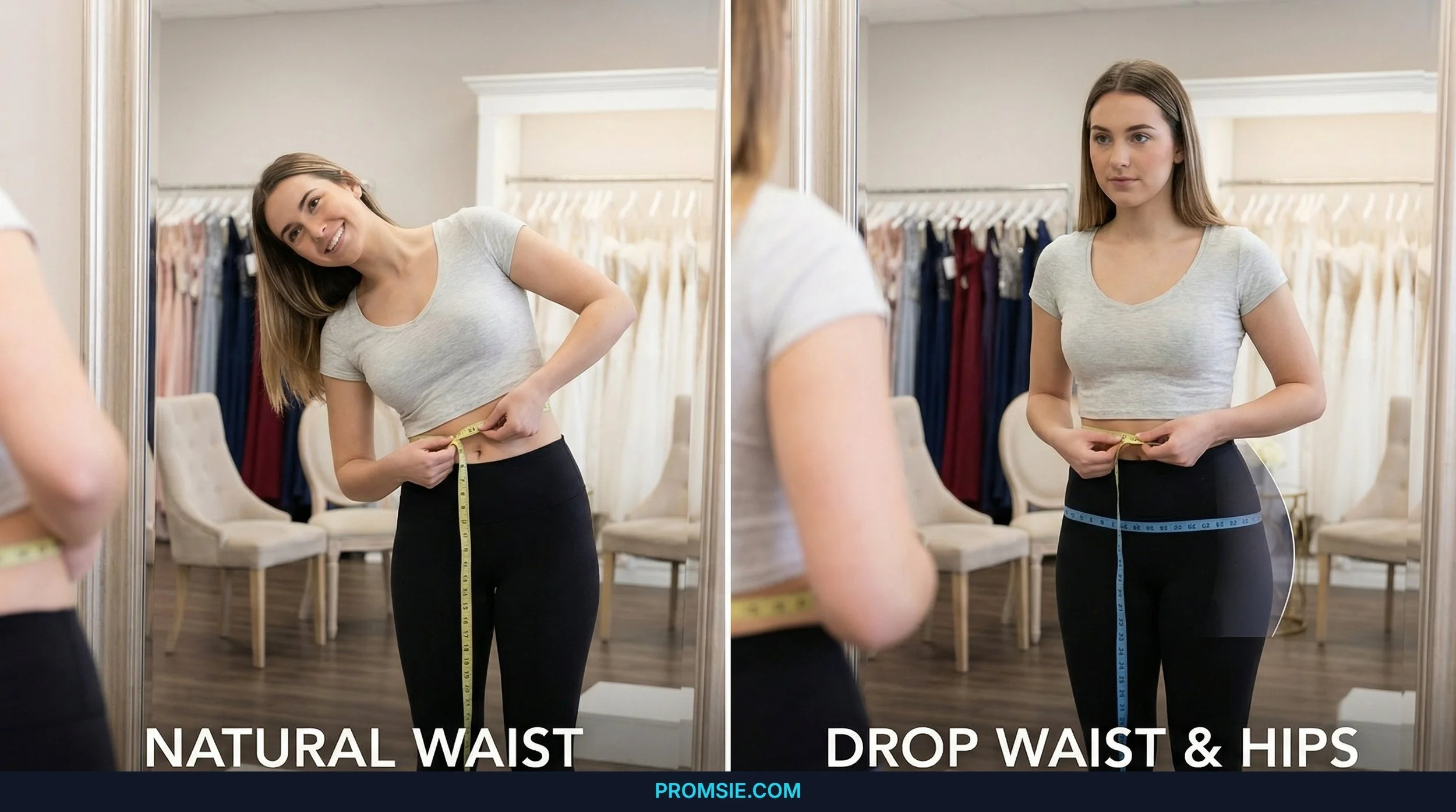
How to find it: Stand in front of the mirror and bend to the side like a little teapot. See where that crease forms on your side? That is your natural waist. It is usually the narrowest part of your torso, typically about an inch or two above your belly button.
The Drop Waist: Some dresses have a "drop waist" that sits lower on the hips. If you're buying that style, measuring your natural waist is still the baseline, but checking the hip fit becomes double important.
3. Hips (The Widest Point)
This is the most common mistake we see. People measure their high hip bones because they can feel them.
Correction: You need to measure the widest part of your lower body. usually, this is around the fullest part of your buttocks. If you measure the high hip bones, you’ll miss the widest point, and your fitted mermaid gown won't make it past your thighs.
Advanced Sizing for Specific Styles (The "Pro" Details)
Want to really ensure a custom fit? Here are the advanced stats you need.
1. Shoulder Width for Sleeved Gowns
If you are vibing with a long-sleeve dress or a cute cap-sleeve moment, you cannot ignore your Shoulder width.
Why: If the shoulders are too narrow, you won't be able to lift your arms to dance or hug your friends. It’s a straightjacket situation.
How: Measure from the bony point of one shoulder, across your back, to the bony point of the other shoulder. This ensures you have the full range of motion to throw your hands in the air like you just don't care.
2. The "Sit Test"
Measurements are taken when you are standing, but you’re going to be sitting at dinner (and in the limo).
Pro Tip: When you measure your hips and waist, slide a thumb under the tape measure to give yourself a tiny bit of ease. This "Sit Test" buffer ensures that your dress doesn't turn into a tourniquet when you sit down.
How to Read a Size Chart Like a Professional
Size charts are scary, but we’re going to decode them. Here is the golden rule that will save your life:
The "Largest Measurement" Rule
Let’s say your measurements look like this:
Bust: Size 4
Waist: Size 6
Hips: Size 8
What size do you order? You order the Size 8.
Why: It is significantly cheaper and easier for a tailor to take a dress in (make it smaller) than to let it out (make it bigger). In fact, many dresses don't have enough extra fabric inside to be let out at all. Always size for your largest part and tailor the rest down.
Standard Length Disclaimer:
Most standard gowns are designed for a fit model who is roughly 5'8" or 5'9" wearing heels.
If your Hollow to Hem measurement is significantly shorter, budget for hemming.
If you are a tall queen and your measurement is longer, you need to look specifically for "Extra Length" options. Do not buy a standard size hoping it will stretch—it won't.
Downloadable Fit Resources
We know this is a lot of info to take in, so we made it easy for you.
The "Perfect Fit" Cheat Sheet (PDF)
We have compiled all of this into a single graphic you can save to your phone. It includes:
The Vertical Fit Protocol checklist (Hollow to Hem + Heels).
The Circumference Checklist.
A blank grid to write down your numbers before you start shopping.
Video Recap
check out our quick video below where we demonstrate exactly how to find that tricky Collarbone to floor measurement without messing it up.
Conclusion: Shop Smart, Alter Less
Finding the perfect prom dress is a vibe, but getting a dress that actually fits? That is a flex. By using the Vertical Fit Protocol, you are not just measuring your width; you are measuring your silhouette.
Remember, the goal is to look like you were poured into that dress, not like you borrowed it from someone else. Always measure with your undergarments on, and never, ever forget the heel height. It’s the difference between a gown that glides effortlessly across the dance floor and one that gets stepped on all night.
Now that you are armed with your numbers, you are ready to find the one. Go get your dream dress and have the best night ever!text here