Fiesta de Graduación: Inside the Modern Mexican Graduation Gala
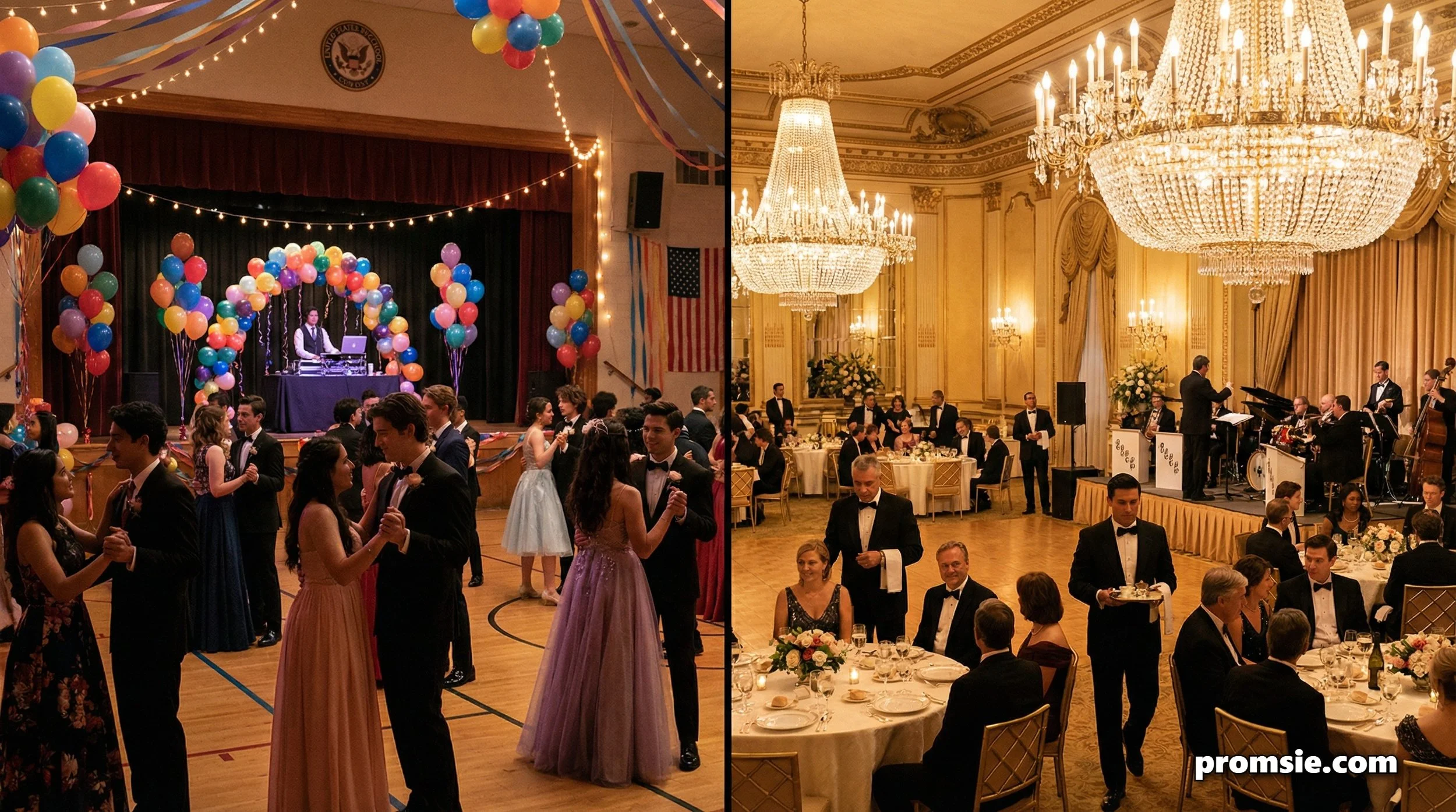
American prom culture is iconic. We have the movies, the corsages, and the awkward slow dances in a decorated gymnasium or a local hotel conference room.
It is a rite of passage, undoubtedly.
However, if you look south of the border, you will find a celebration that makes the standard American prom look like a casual Tuesday hang-out.
In Mexico, high school graduation isn't just a dance for the students; it is a full-scale, black-tie production known as the Fiesta de Graduación.
While a Quinceañera marks the transition from girlhood to womanhood at age 15, the Fiesta de Graduación is the definitive send-off into the adult world. It carries a weight and grandeur that few US events match.
We are talking about events that rival six-figure weddings, lasting until the sun comes up, involving entire extended families.
If you are looking for formal family graduation party ideas or just want to see how the other half celebrates, welcome to the major leagues of event planning.
The Invite List: Why Parents Crash the Party
The fundamental difference between a US Prom and a Mexican Graduation Gala is the guest list. In the States, parents wave goodbye from the driveway after taking a few hundred photos. Maybe they chaperone if they are unlucky.
In Mexico, the parents are the VIPs. They are the ones sitting at the head of the table.
This is a multi-generational celebration of achievement. Graduating high school (known as Preparatoria or Bachillerato) is viewed as a collective family victory. Because of this, students do not just buy a ticket for themselves and a date.
Families purchase entire tables, often seating ten to twelve people. You bring your parents, your siblings, your grandparents, and yes, your Padrinos.
Padrinos, or godparents/sponsors, play a massive role here. In many traditional circles, Padrinos help sponsor specific elements of the party—perhaps the music, the flowers, or the toast. It creates a communal sense of ownership over the event.
Everyone is invested, literally and emotionally, in seeing the graduate succeed. This dynamic changes the entire vibe of the night.
It is not just teenagers grinding to hip-hop; it is grandmothers dancing salsa with grandsons and fathers clinking glasses with their daughters' friends. The energy is communal, safe, and explosively joyful.
Venue Wars: Haciendas Over Gymnasiums
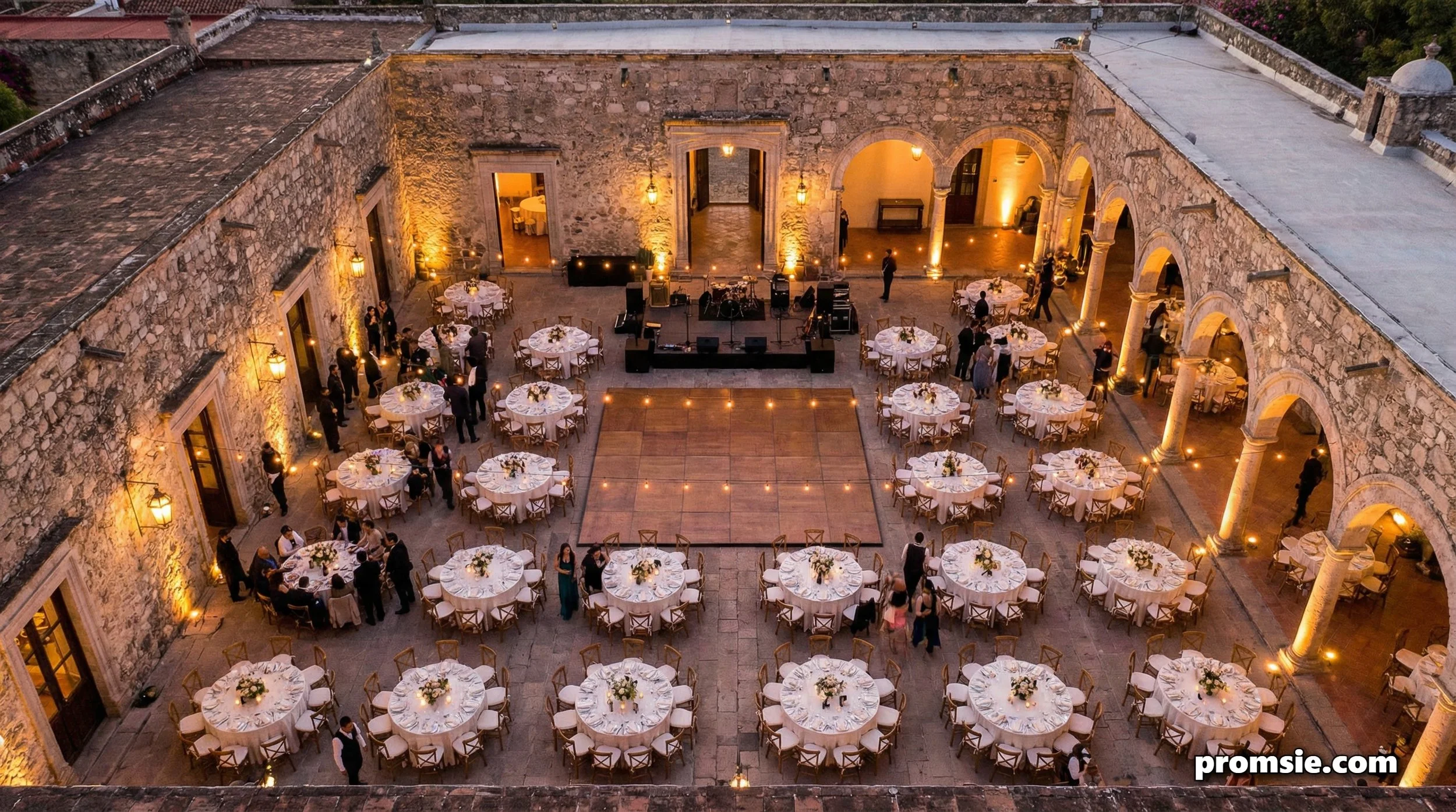
Forget the crepe paper and balloon arches. The venues for these galas are often historic Haciendas, five-star hotel ballrooms, or exclusive event gardens.
The planning committees for these classes often start working a year or two in advance to secure the best locations. We are seeing a trend for modern gala themes 2026 leaning heavily into "Botanical Luxury"—think open-air courtyards in centuries-old buildings draped in thousands of pesos worth of real floral arrangements, not plastic replicas.
The production value is incredibly high. You will often see pyrotechnics when the class enters, professional lighting rigs that would suit a concert, and giant LED screens displaying childhood photos of the graduates.
The atmosphere is designed to feel momentous. It communicates to the student that their academic achievement is a big deal, worthy of the finest setting the family can afford. The decor is usually sophisticated: floor-length tablecloths, chiavari chairs, and centerpieces that block your view of the person across the table.
The Marathon Menu and the Tornaboda
If you go to an American prom, you might get a buffet of sliders, maybe a chicken plate if the school is fancy, or just light snacks and punch. The Mexican graduation party traditions regarding food are entirely different. This is a culinary marathon.
The night usually begins with a formal three or four-course sit-down dinner. This happens late by American standards, often starting around 9:00 PM or 10:00 PM. The menu is sophisticated—cream soups, steak or salmon, fine pastries. But the food does not stop there.
The secret weapon of the Mexican gala is the "Tornaboda."
The Tornaboda is the after-party meal, served traditionally between 2:00 AM and 4:00 AM. Just when energy levels might be dipping from hours of dancing, waiters emerge with the ultimate comfort foods to soak up the tequila and keep the party alive.
We are talking about chilaquiles (tortilla chips in red or green salsa with cream and cheese), tacos al pastor, or warm pozole. It gives everyone a second wind. The goal is to make it to sunrise. Leaving a party at midnight is practically an insult; leaving at 5:00 AM means it was a good night.
The Soundtrack: From Sinatra to Salsa

Music at a Fiesta de Graduación is rarely just a playlist or a solitary DJ. The gold standard is the "Grupo Versátil." This is a live band, often consisting of 10 to 15 musicians, capable of playing absolutely every genre of music. They are showmen. They change costumes. They interact with the crowd.
The night follows a specific sonic arc. Dinner features soft jazz or instrumental covers. Then, the formal waltz (more on that in a second).
Once the party opens up, the band cycles through sets: 70s disco, 80s rock, classic Cumbia, Salsa, and modern Reggaeton. It ensures that the grandparents get to dance to the songs they love, and the students get their Bad Bunny fix later in the night.
Often, a DJ takes over during the band's breaks to keep the energy high. The transition is seamless. You do not sit down.
The Emotional Core: The Baile de Graduación
While the party is wild, the heart of the event is the formal waltz. This is not the awkward swaying you see at US proms. This is the "Baile de Graduación." Traditionally, the students line up, often by height or alphabetical order, and perform a choreographed waltz. It is elegant and disciplined.
But the real tear-jerker is the parent-student dance. The lights dim. The boys walk across the floor to take their mothers' hands; the girls meet their fathers.
The song choice is usually something incredibly sentimental—think "My Way" or a Spanish ballad about growing up. For three minutes, the entire room is weeping. It is a visual representation of gratitude and letting go.
It acknowledges that the diploma belongs to the parents just as much as it belongs to the student. Following this, there is the "Brindis," a formal toast often led by the class president or a chosen parent, reflecting on the journey and the future.
2026 Fashion Trends: The Anti-Prom Look
Fashion at these galas is distinct from the typical US mall-bought prom dress. Because it is a white-glove affair, the dress code is strictly formal. For the young women, the trend for 2026 is shifting away from the sheer, beaded "naked dresses" often seen on red carpets and moving toward architectural volume. Think modern Cinderella—big skirts, but with sharp, clean lines and hidden pockets. Heavy satins and mikado fabrics are preferred over flimsy tulle. It is about taking up space.
For the guys, the ill-fitting rental tuxedo is non-existent. Mexican male graduates take tailoring seriously.
The "Modern" look for 2026 involves slim-fit cuts and a departure from standard black. We are seeing a surge in jewel tones—deep burgundy, forest green, and midnight blue tuxedos with black lapels. It is sharp, personalized, and looks expensive.

Strategic Comparison: Prom vs. Fiesta
If you are trying to explain the difference to your friends, here is the breakdown.
| Feature | US High School Prom | Mexican Fiesta de Graduación |
|---|---|---|
| Guest List | Students & Dates only | Students, Parents, Grandparents, Padrinos |
| Duration | 4-5 hours (Ends at 11 PM or 12 AM) | 8-10 hours (Ends at dawn) |
| Food | Buffet or light snacks | Formal multi-course dinner + 3 AM Tacos |
| Music | DJ with a laptop | 12-piece Live Band + DJ |
| Tradition | Prom Queen/King Crowning | Parent-Student Waltz & Formal Toast |
| Vibe | High School Dance | Royal Wedding |
Bringing the Gala Energy Home
You do not need a Mexican passport to adopt this energy. The biggest takeaway from the Fiesta de Graduación is the integration of family. In the US, we are often in a rush to separate the generations, to push the kids out of the nest.
This tradition argues that the launch is better when the whole village is there to countdown.
Maybe for the class of 2026, we stop viewing graduation parties as just a keg in the backyard or a dance in a gym. Maybe we invite the grandparents to the after-party, order the late-night tacos, and dance until the sun comes up.