Baggy Suits for Guys Prom 2026: The Intentional Volume Guide
The 2026 prom season marks the final nail in the coffin for the ultra-slim, 'suit-supply' silhouette that dominated the last decade.
At Promsie, we’re seeing a total rejection of the corporate drone look. Today’s young men are leaning into tailoring that feels more like a draped sculpture than a uniform. It hits different because it’s not about hiding the body; it’s about commanding the space around it.
This era is defined by a shift toward intentional volume, where the fabric becomes an extension of movement rather than a restriction of it.
We are moving away from the skin-tight aesthetic and entering a valid phase of relaxed elegance that prioritizes comfort without sacrificing a shred of authority.
This isn't just about wearing big clothes. It is about understanding the geometry of fabric and how it interacts with the air.
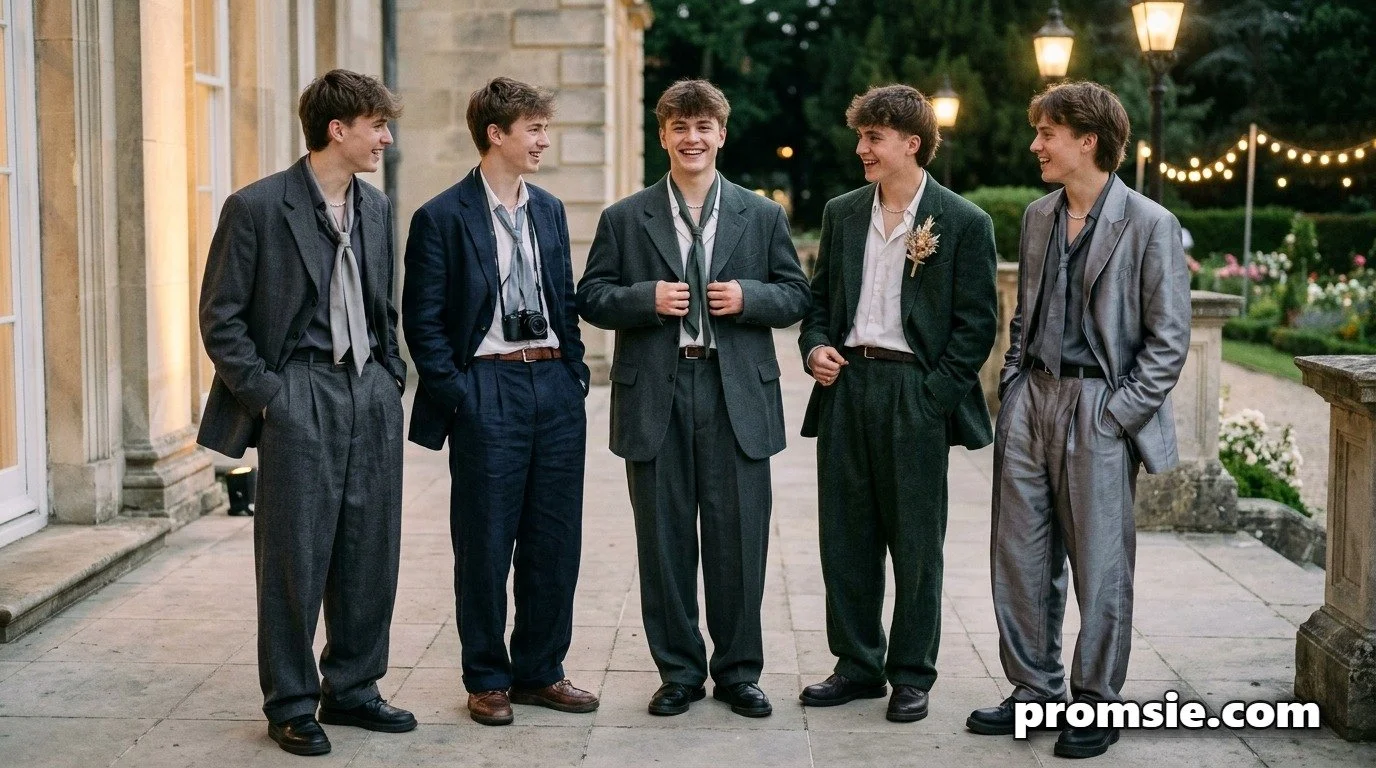
The Anatomy of the 2026 Wide-Cut
The transition from baggy to intentional lies in the construction. We aren't just buying two sizes up. The modern wide-cut suit is engineered with specific drop shoulders and tapered waists to ensure you don’t look like you’re drowning in fabric.
The technical aspect involves shifting the balance of the garment. In a standard suit, the tension is held at the chest and hips. In the 2026 baggy silhouette, the tension is redistributed to the neck and the natural shoulder line.
This allows the rest of the suit to hang freely. Designers are utilizing a broader chest plate to create a canvas that doesn't collapse when the wearer moves. This structural choice ensures that even though the suit is voluminous, it still maintains a clear, recognizable shape.
It’s the difference between looking like you borrowed your dad's suit and looking like you own the room.
The Jacket: Beyond the Shoulder
The jacket is the anchor of the entire look. For 2026, we are seeing a massive resurgence in double-breasted silhouettes with peak lapels that extend toward the shoulder pads. The goal is a broad, grounded frame.
Data from luxury editorial reviews suggests that the Fluid Canvas construction—which removes heavy internal stiffening—is the preferred method for achieving that organic drape.
When you remove the horsehair canvas from the interior, the wool is allowed to move with the wearer. This creates a lowkey ripple effect as you walk, which is the hallmark of high-end tailoring this year.
The shoulder is often slightly dropped, meaning the seam sits an inch or two past your actual shoulder bone.
However, the collar must still hug the back of your neck perfectly. If the collar gaps, the suit has failed.
This specific balance between a loose body and a precise neck fit is what makes the 2026 era so technically demanding for tailors.
The Trouser: Puddling and Pleats
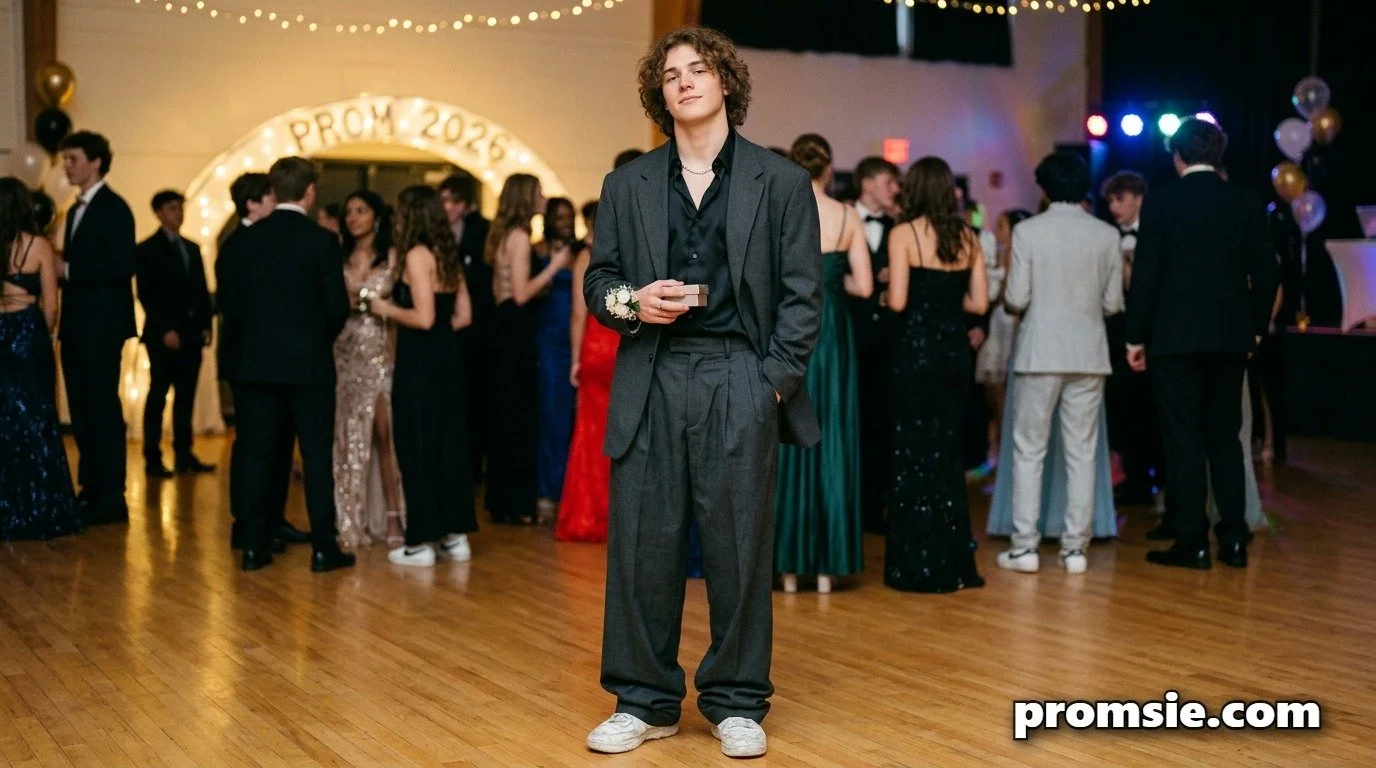
The trousers are where most people miss the mark. A valid baggy suit requires a high-rise waist and deep double pleats.
This allows the fabric to flow from the hip without creating awkward bunching at the fly. We are seeing a complete departure from the flat-front trouser. Pleats act like bellows on an accordion, expanding when you sit and collapsing into sharp, vertical lines when you stand.
The puddle effect at the ankle is currently the gold standard, where the hem rests softly on the shoe rather than being sharply tailored to the mid-ankle. This requires a specific leg opening—usually 10 to 12 inches—to ensure the fabric gathers in a way that looks intentional rather than accidental.
The internal construction often includes a hidden drawstring or a high-grip waistband to keep the extra fabric from dragging the pants down your hips throughout the night.
Fabric Selection: Grounded Minimalism
In a minimalist era, the texture does the heavy lifting that patterns used to do. We are moving away from shiny synthetics and toward high-integrity natural fibers. If the fabric is too light, the baggy silhouette collapses and looks messy.
If it’s too heavy, you lose the fluid movement that makes this era's tailoring so sophisticated.
THE
FABRIC
SPECS.
The silhouette is the vision, but the fabric is the infrastructure. In 2026, we prioritize materials that hold their structural integrity under the high-gloss pressure of the event era.
| Fabric Type | Vibe | Best For |
|---|---|---|
| Heavyweight Wool Crepe | Structural & Matte | Formal Events / Winter |
| Raw Silk & Linen Blend | Lived-in Sophistication | Summer Weddings |
| Tropical Wool | Breathable & Sharp | Daily Professional Wear |
| Recycled Hemp Twill | Earthy & Grounded | Creative Casual |
Choosing the right weight is vital. We recommend a 300g to 350g wool for prom. This weight has enough 'thud' to hang straight, resisting the wrinkles that plague thinner, cheaper fabrics. When you walk, a heavyweight crepe will swing in one piece, whereas a thin polyester will flutter and look cheap.
The Challenge: Why Your Sizing Up Strategy is Flawed
Let’s be direct: if you think you can just walk into a fast-fashion outlet and buy a size 44 when you’re a size 40 to achieve this look, you are making a mistake. Buying an oversized suit that wasn't designed to be oversized results in a collar that stands away from your neck and sleeves that swallow your hands.
It looks sloppy, not sophisticated. A suit that understood the assignment is one where the neck and wrists fit perfectly, while the body and legs provide the volume. If the proportions at the anchor points—neck, shoulder, wrist—are off, the entire look fails.
The sleeves should still be tailored to hit exactly at the base of your thumb, regardless of how wide they are. This creates a frame for your hands, which is essential for maintaining a polished appearance while holding a glass or a phone.
Invest in a tailor who understands volume, or don't attempt this trend at all.
Footwear Pairings and Styling
To keep the look grounded and minimalist, the styling must remain understated. Forget the slim, pointed dress shoes of the 2010s. A voluminous suit requires a substantial base. Think chunky derbies, lug-sole loafers, or even high-end minimalist trainers in leather. The visual weight of the shoe must match the volume of the trouser leg to maintain balance.
If you wear a slim shoe with a 22-inch leg opening, your feet will look like toothpicks, and the whole silhouette will feel top-heavy. The shirt underneath should be equally thoughtful. A crisp, high-collar poplin shirt works well, but for a more modern 2026 approach, many are opting for fine-gauge cashmere turtlenecks or high-quality heavyweight tees.
It keeps the energy relaxed but clearly premium. Tonal dressing—wearing varying shades of the same color—is the most effective way to elongate your frame when wearing wide cuts.
Risk Analysis: The Erasure of Form
While the oversized look is undeniably current, it carries a specific risk that many enthusiasts ignore until they see the photos.
The primary risk of the baggy suit era is the Erasure of Form. In professional or high-stakes environments, excessive volume can be misinterpreted as a lack of discipline or attention to detail. If the garment lacks a sharp, pressed crease or if the fabric is prone to excessive wrinkling, the aesthetic moves from sophisticated minimalist to unkempt very quickly.
You must maintain the garment's integrity through constant steaming and proper hanging. If you cannot commit to the maintenance of the drape, the volume will eventually work against you.
The Color Palette of 2026
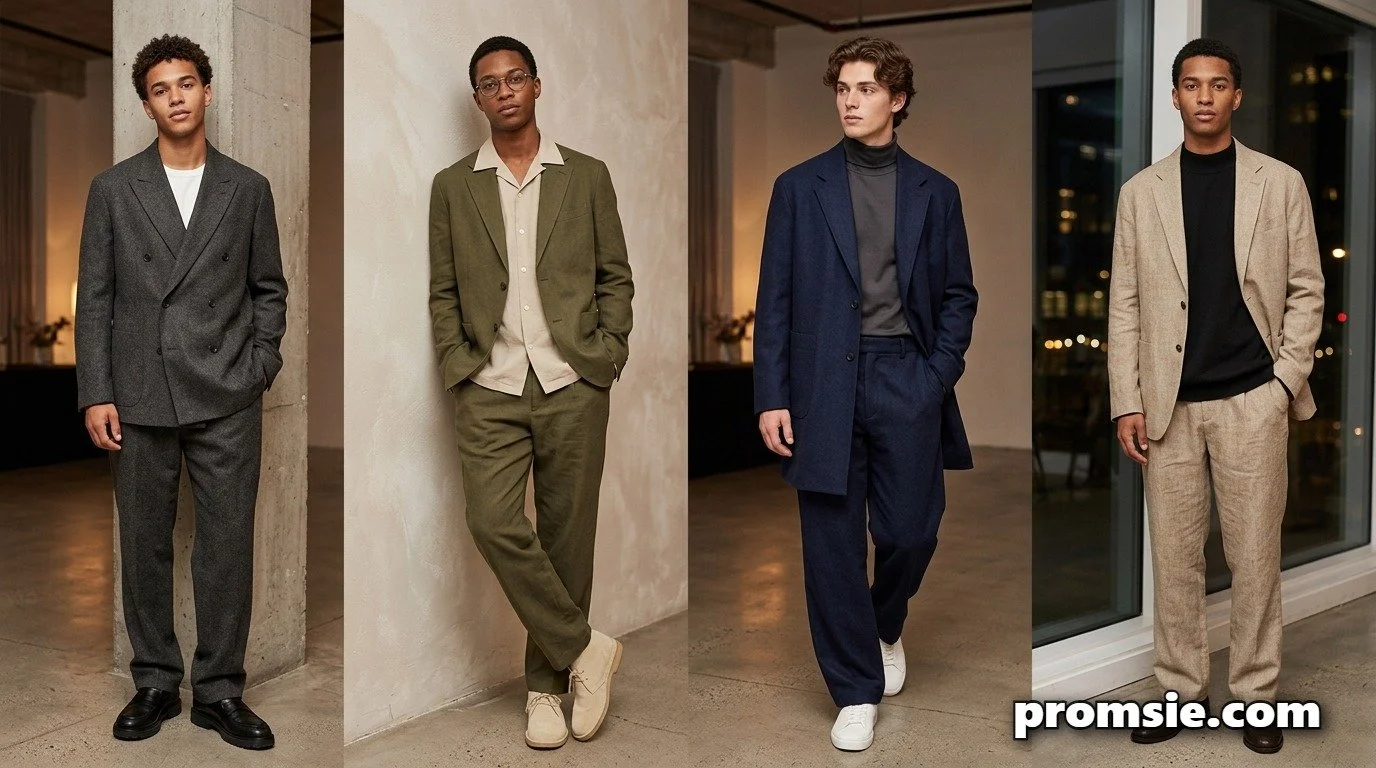
We are seeing a departure from classic navy and charcoal. The new neutrals are inspired by the earth and urban minerals. Stone and Bone shades—off-whites, creams, and light greys—are dominating the summer circuits.
These colors highlight the shadows and folds of a wide-cut suit, making the tailoring the star of the show. For those who want something darker, Bitter Chocolate and Olive provide a grounded alternative to black.
These shades feel more human and less uniform, fitting perfectly into the minimalist ethos of the year. When you wear these earth tones in a monochromatic way, the focus stays on the silhouette and the quality of the fabric rather than the color itself. It is a lowkey flex that shows you don't need bright colors to stand out.
The Longevity Factor
Minimalism is often criticized for being boring, but in 2026, the boring is the point. By stripping away the logos and the tight fits, we are left with the quality of the cloth and the skill of the cut. A well-made baggy suit isn't just a trend; it's a foundational piece that will remain valid for years because it doesn't rely on gimmicks.
It reflects a change in how we view ourselves—we no longer feel the need to be corseted by our clothing to prove our worth. There is a quiet confidence in wearing more fabric than necessary.
It suggests that the wearer is comfortable in their skin and doesn't need to shout to be noticed. It’s a powerful future for tailoring where the individual dictates the shape of the clothes, not the other way around.
Next Step: Identify your anchor size by measuring your neck and shoulders precisely, then seek out designers specifically branding their cuts as Relaxed Tailoring or Fluid Canvas rather than simply sizing up on standard fits.
The modern baggy suit is a masterclass in intentional volume. By focusing on high-quality natural fabrics like wool crepe, architectural tailoring that fits at the anchor points, and a grounded color palette of stone and olive, the 2026 guy achieves a look that is both sophisticated and effortless.
It is a total rejection of the restrictive past in favor of a fluid, powerful future defined by the puddle hem and the double-breasted frame.